

Civic Education for Kids: What They Learn from Grade 3 to Grade 8 and How to Bring It to Life
Rules, rights, community and democracy: what the school curricula cover, grade by grade, civic values, tips for home and 12 classroom activities.
Civic education teaches children to live well together with others: rules, rights and responsibilities, values, community and democracy. It is a school subject in grades 3 and 4 and continues in middle school as Social Education, one hour a week, through grade 8.
Below you will find, grade by grade, what your child learns and what you can do at home, what Romanian students know according to the international ICCS study, civic values and 12 activities with printable worksheets.
How much do you know about your child's civic education? 5 questions
Choose the answer that seems right to you. After each question you'll see the explanation, and at the end you'll get the activity sheets for free.
This is not a psychological test. The answers come from this guide and its sources.
Your child is in grade 7.
What topic are they studying in Social Education?
In grade 7, students learn about human rights, the Constitution, laws, elections and civil society. Intercultural education is in grade 6, and economic and financial education is in grade 8.
Your child complains that the house rules “aren't fair.”
What helps more?
The grade 3 curriculum suggests a set of class rules written by the children, with rights and responsibilities. It works the same way at home: children find it easier to follow rules they helped create.
On the international ICCS 2022 test, Romanian 8th graders...
What did the results show?
They scored 470 points, compared with an average of 508, but 55% volunteer (average: 37%) and 86% voted for their class representative (average: 78%).
Your child shows you a post that seems outrageous.
Which question teaches them critical thinking?
Telling facts apart from opinions is the first critical thinking topic in 5th grade. It's best practiced with real news stories.
A new classmate always sits alone at recess.
What behavior does a child learn in Civic Education?
The 4th grade curriculum contrasts prosocial behavior (helping, cooperation, tolerance) with antisocial behavior. A small gesture of inclusion is civics in practice.
You got 0 out of 5 right.
You know very well what your child is learning.
The activity sheets give you 12 ideas by age, plus the sheet for the class project about a problem in the community.
You already know most of it.
Grade by grade, the guide covers what your child learns in Civic Education and Social Education and what you can do at home. The sheets are ready to print.
The guide is worth reading.
Civic education spans six years of school, from 3rd to 8th grade. The guide explains it in terms parents can easily understand, and the sheets give you activities to do together.
What Is Civic Education
Civic education is the part of education that prepares children to be good members of the groups they belong to: their family, their class, their neighborhood, their country. They learn the rules and why they exist, their own rights and the rights of others, how decisions are made together, and how they can change something, legally and with sound arguments.
It's not a subject to memorize. The curriculum for grades 3 and 4 has three goals: for children to apply rules of conduct in everyday life, to show moral and civic behavior in the places they know, and to cooperate with others. What matters is what children do, not what they recite.
What Romanian Students Know
In 2022, Romania took part for the first time in ICCS, the international civic education study, with 8th grade students.
Romanian 8th graders compared with the average of the countries in the study
Percentages of students tested, ICCS 2022
Source: Edupedu.ro, on the ICCS 2022 results, and the Ministry of Education. For the knowledge levels, the percentages for Romania are approximate, as reported. Romania's average score: 470 points, compared with 508.
Romanian students want to get involved more than the average, but know less about how democracy works.
The desire to do something is already there: most of them volunteer and vote in class. What's missing is knowledge and practice: how a law is made, who makes decisions in the city, how you ask for change. This is where school helps, and home most of all.
What Children Learn, by Grade
What the Civic Education and Social Education curricula say, rewritten so parents can easily understand them, and what you can do at home each year. The full text of the curricula is listed in the sources.
Grade 3
Civic Education
What it means to be a person, and moral traits: kindness, respect, honesty, courage, modesty, trust. Caring for things, plants and animals. Small groups (family, friends, the class), their rules, rights and responsibilities. Children's rights.
At home: Make the house rules together, with rights and responsibilities for everyone, and put them on the fridge.
Grade 4
Civic Education
The places we belong to: our town, our country, Europe, and their symbols. Values (goodness, altruism, honesty, respect, responsibility, solidarity) and norms. Prosocial behavior (helping, cooperation, tolerance, volunteering) versus antisocial behavior.
At home: Visit the city hall or a city museum. Do a good deed together for someone in your building or neighborhood.
Grade 5
Social Education: critical thinking and children's rights
How to ask good questions, how to tell a fact from an opinion, what stereotypes and prejudices are. The UN Convention on the Rights of the Child: rights and responsibilities, the institutions that protect children, school as a place where you exercise your rights.
At home: Read a news story together and ask: what is fact here and what is opinion? Who wrote it and why?
Grade 6
Social Education: intercultural education
Cultural diversity, identity and traditions, the relationship between “me” and “others.” The values of an intercultural society and what violates them: intolerance, discrimination, racism, xenophobia. Communication between cultures.
At home: Cook a recipe from another culture or from another region of the country and talk about the people who live there.
Grade 7
Social Education: education for democratic citizenship
Human rights, the Constitution of Romania, the separation of powers, the rule of law, how laws are made. Citizens' rights and freedoms and their limits, the justice system, elections, civil society, the role of the press. A class project about a problem in the community.
At home: When you go to vote, talk with your child before and after: what we're choosing, why, and how we informed ourselves.
Grade 8
Social Education: economic and financial education
The economic dimension of citizenship: consumer rights, budgeting, banks, insurance, entrepreneurial spirit. The citizen who knows how to ask, in writing, for what they are entitled to.
At home: Details and activities in our guide to financial education for children. Read the guide.
In the early grades, from the preparatory grade through Grade 2, rules, emotions and friendship are learned in Personal Development. You'll find them in our guide to Personal Development. In middle school, each year also includes a class project, which takes up about a quarter of the year's class hours.
Civic Values
A good citizen is, above all, a person of character. The Grade 4 curriculum names the values directly: goodness, honesty, respect, responsibility, solidarity. Here they are in words children can understand.
Respect
I listen to the other person all the way through, even if I don't agree with them.
Responsibility
I do what I promised the group, and I own up to what didn't work out.
Honesty
I tell the truth: when we vote, on tests, and when I make a mistake.
Solidarity
I help when someone needs it, even if they're not my friend.
Tolerance
People who are different from me have the same rights I do.
Civic Courage
I calmly speak up about what's wrong, even if I'm the only one.
That's also what Asociația Maxwell România does in schools: it helps children make choices based on values, take ownership of what they choose, and be a positive influence on others. For middle school, the program lasts three years, one for each guide:
Self-awareness and values: who I am and what matters to me.
Responsibility and collaboration: what I do for my group and for my community.
Positive influence and resilience: how I can help others grow.
The guides correspond to the years of the “Education for Life” optional course for grades 5-7, which any school in Romania can choose, and they are part of our personal development program for students. If you'd like to volunteer together with your child, read the guide to volunteering in education.
How to Bring It to Life at Home
Six habits that make your family the first school of civics. These are our suggestions.
House Rules, Made Together
Children follow rules more easily when they helped make them. Write them together, with rights and responsibilities for everyone, including the adults.
The Family Meeting
Once a week, 15 minutes: what went well, what didn't, what we decide. Everyone gets one vote, and your child learns how a group makes a decision.
Ask “What do you think?”
And listen to the answer all the way through. A child who shares their opinion at home will also share it in class, at the ballot box, and in the community.
Action, Not Just Opinion
Something concrete for others: walking the dog of the elderly lady on the ground floor, donating books, cleaning up the park.
The News, Explained
Pick one age-appropriate news story a week. Ask: Who decided this? Who is affected? What would we do?
Show, Don't Just Tell
Children see how you talk about your neighbors, about police officers, about people who don't think like you. Your example is their first civics lesson.
Printable activity sheets
What your child learns in each grade, the tips, the 12 activities, and the worksheet for the class project about a problem in the community. Free, in PDF.
12 Activities by Age
Click an activity to see the steps, what you need, and how long it takes. The class rules, “Small Hands Do Big Deeds,” the “What would you do if...?” dilemmas, the campaign for mayor, the school law, and the community project are based on the school curriculum. The others are our own suggestions.
1. Me and My Group
For grades 3 and 4
Class Rules, with Rights and Responsibilities
An activity from the 3rd grade curriculum: the class writes its own rules.
50 minutesAges 8-10
How to do it
- On slips of paper, the children suggest what rights they'll have in class: to be listened to, to play during recess.
- For each right, they find the responsibility that makes it possible: to be listened to, I listen to others too.
- They vote on the 6-8 most important pairs.
- They write them out neatly on a poster, and everyone signs it.
What you need
Slips of paper, a large poster board, markers.
Takeaway: Every right comes with a responsibility, and the rules belong to all of us.
Little Hands Do Big Deeds
A project suggested by the 3rd grade curriculum: the class picks a good deed and does it together.
One weekAges 8-11
How to do it
- The children suggest good deeds for the school or the neighborhood: a flower garden, books for younger kids, cards for a nursing home.
- They vote on one and divide up the tasks: who brings what, who makes what, who delivers it.
- They do it together, within a week.
- They talk about how they felt and what their good deed changed.
What you need
Depends on the deed. School approval if you leave the classroom.
Takeaway: Even a child can change something in the world around them.
Symbols of Our Country and of Europe
The children make a collage of the places they belong to: their city, their country, Europe.
45 minutesAges 9-10
How to do it
- On a large sheet of paper, draw three circles, one inside the other: your town, Romania, the European Union.
- In each circle, they glue or draw the symbols: the city's coat of arms, the flag, the national anthem, the EU flag.
- Write down the holidays: December 1, Europe Day (May 9), the city's day.
What you need
A large sheet of paper, magazines, glue, colored pencils.
Takeaway: I belong to a city, a country and Europe, all at the same time.
What Would You Do If...?
Short dilemmas from children's everyday lives, discussed in groups, as in the 4th grade curriculum.
30 minutesAges 9-12
How to do it
- Read a situation aloud: A new classmate is sitting alone at recess. You found a wallet. Your friend is cheating on a test.
- Everyone says what they would do and why.
- Discuss: What value is at stake? Respect, honesty, solidarity?
- The class chooses a response that everyone can put into practice.
What you need
Situation cards.
Takeaway: Values show in what we do, not in what we say.
2. Rights and Opinions
For grades 5 and 6
Fact or Opinion?
Students sort the sentences in a news story into facts and opinions.
35 minutesAges 11-13
How to do it
- Choose a short news story about the school or the city.
- Students underline facts in green (they can be checked) and opinions in red (someone believes them).
- Discuss the sentences that are hard to classify.
- Each student rewrites an opinion as a verifiable fact, or the other way around.
What you need
The printed news story, two colors.
Takeaway: Before I believe or share something, I ask: Is it a fact or an opinion?
Map of Children's Rights
Students choose rights from the UN Convention and look for where they show up, or don't, in their own lives.
50 minutesAges 11-12
How to do it
- Use the child-friendly version of the UN Convention on the Rights of the Child.
- Each group is given one right: the right to education, to play, to express an opinion, to protection.
- The group explores: Where do I see this right respected? Where don't I? Who can help me?
- They make a poster for the school hallway.
What you need
The child-friendly version of the Convention, paper, markers.
Important: If a child says their rights are being violated at home or at school, listen to them and get help: Telefonul Copilului, 116 111, free of charge.
The takeaway: I have rights, I know them, and I know whom to ask for help.
Interviewing Grandparents
Students learn from a family member what life was like in another era or another culture.
One evening, then 30 minutes in classAges 11-13
How to do it
- Each student prepares 5 questions: What was school like? What traditions did you have? What rights didn't you have?
- They conduct the interview and take notes.
- In class, each student shares what surprised them.
What you need
A notebook, or a phone for recording, with the interviewee's consent.
The takeaway: My identity comes from somewhere, and other people have different stories.
What We Have in Common
An intercultural education game: students discover different traditions and shared values.
45 minutesAges 11-13
How to do it
- Each student brings a tradition from their family: a dish, a song, a holiday.
- The class places them on a map.
- Together, look for what they have in common: family, generosity, the joy of being together.
What you need
A large map, sticky notes.
The takeaway: Our differences enrich us, and our values bring us closer.
3. Community and Democracy
For grades 7 and 8
I'm Running for Mayor
A role-play from the 7th grade curriculum: an election campaign in the classroom.
2 hoursAges 13-14
How to do it
- Three or four students run for mayor of their town. Each candidate has a team.
- The teams write a platform with three realistic promises and make a poster.
- The candidates present their platforms, and the class asks them questions.
- The vote is secret, with ballots and a ballot box. Then discuss: what did we base our vote on?
What you need
Paper, ballots, a box to serve as the ballot box.
The takeaway: A vote is an informed choice, not a matter of who you like.
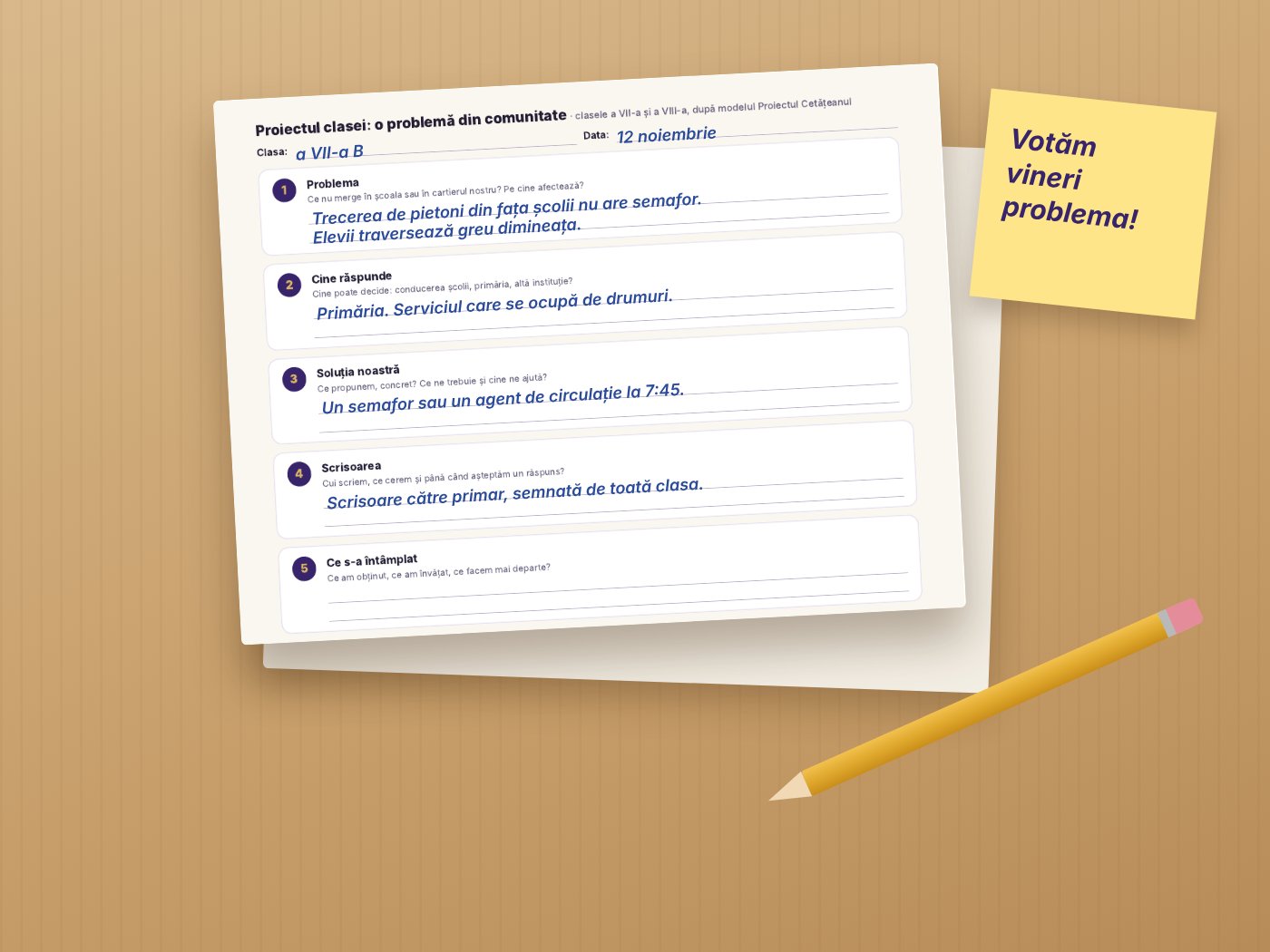
Class Project: A Problem in the Community
Based on the Project Citizen model from the curriculum: the class chooses a real problem and proposes a solution.
Several weeksAges 13-14
How to do it
- The class makes a list of problems at school or in the neighborhood and votes on one.
- They find out who is responsible for it: the school, the city hall, or another institution.
- Propose a solution, with steps and approximate costs.
- Write a letter to the person who can make the decision and ask for a meeting.
- Present the project to parents and the community.
What you need
The “Class Project” worksheet in the PDF.
Takeaway: I know who makes the decisions and how I can legally ask them for a change.
A Law, from Idea to Vote
A role-play suggested by the curriculum: students make a school “law,” with a debate and a vote.
50 minutesAges 13-14
How to do it
- We start from a proposal: phones during breaks, for example.
- One group writes the proposal, another critiques it, and another suggests changes.
- The class debates, respecting the time limit and taking turns to speak.
- The final vote. Discuss: how is a real law made in Parliament?
What you need
A timer, sheets of paper.
Takeaway: A good rule is made with arguments, not by whoever shouts the loudest.
The Student Council, for Real
Students find out what the student council at their school does and propose something through it.
50 minutes, then follow-upAges 12-14
How to do it
- Invite the class representative or the student council president to talk about what they do.
- Students choose a proposal for the school.
- They write it clearly: the problem, the solution, who can help.
- The representative takes it to the council. Follow what happens to it.
What you need
A class period with the representative, a sheet for the proposal.
Takeaway: Students' voices already have a path in the school. I use it.
Frequently Asked Questions
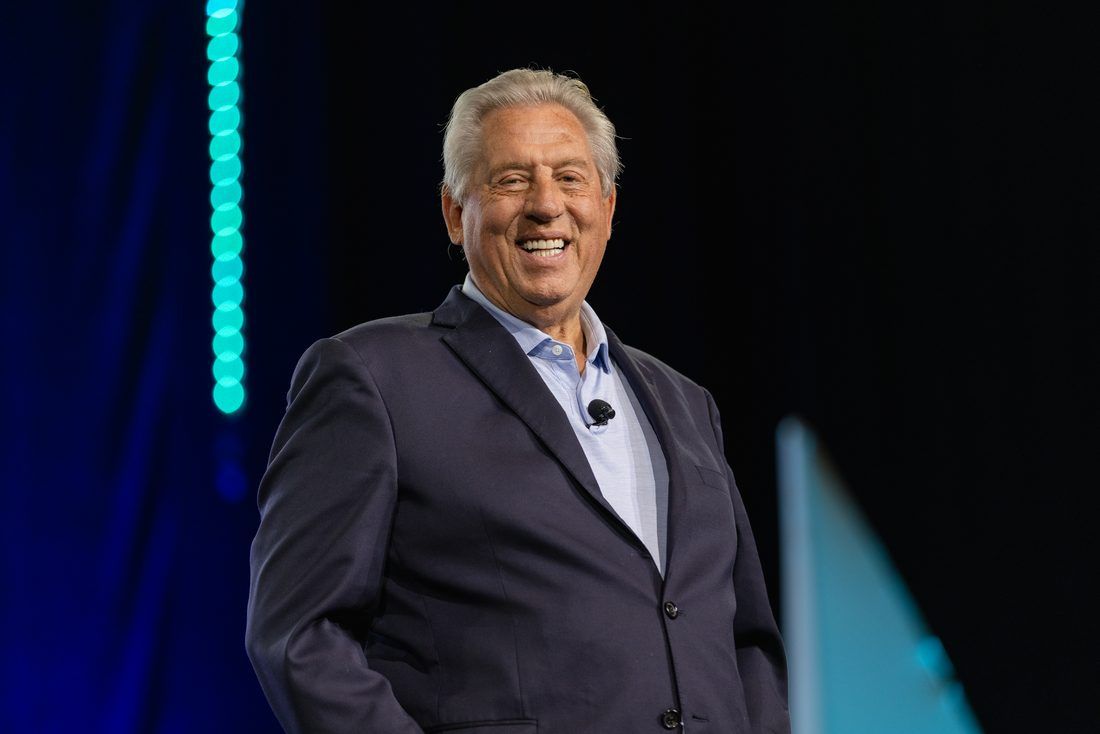
The association's programs are based on the ideas of John C. Maxwell, author of more than 100 books on leadership. The idea that ties them together: influence is built on character, and character is formed early.
The “iChoose,” “iDo,” and “iLead” guides used in schools were created by his nonprofit foundation, Maxwell Leadership Foundation, and Asociația Maxwell România translated and adapted them for schools in Romania. About John C. Maxwell and the schools program.
Sorin Popa, President of Asociația Maxwell România and of Maxwell Leadership România.
Last reviewed: November 20, 2026. Written by the Asociația Maxwell România team.
Sources
What children learn in each grade comes from the national school curricula. The figures come from the international ICCS 2022 study. The tips and some of the activities are our own suggestions.
- Civic Education curriculum, grades 3 and 4, approved by Minister's Order no. 5003/02.12.2014: one hour per week, skills and content by grade, and the suggested activities and projects, including “Small Hands Do Great Deeds” and the class rules.
- Social Education curriculum, grades 5-8, approved by Minister's Order no. 3393/28.02.2017: one hour per week, the topics for each grade, and the 7th grade activities: the “I'm Running for Mayor” campaign, a role-play of how laws are made, and Project Citizen.
- Ministry of Education: Order no. 3393/2017: the middle school curricula were phased in one grade at a time, from 5th grade in 2017-2018 to 8th grade in 2020-2021.
- Edupedu.ro: Romanian students' results in the international ICCS 2022 study (April 10, 2024): a score of 470 compared with an average of 508, proficiency levels, volunteering, and voting for a class representative.
- Ministry of Education: ICCS 2022 assessment results: Romania's first participation in the study, with 8th grade students.
- UNICEF România: the United Nations Convention on the Rights of the Child, child-friendly version: children's rights, explained in a way children can understand.
- Romania's report to the UN Committee on the Rights of the Child: Romania ratified the Convention on September 28, 1990, through Law no. 18/1990.
See also
Financial Education for Children
What they learn about money at each age, the values behind money, and 12 activities.
Read the guide →Classroom Rules
How to set them together with your students, examples by age, and a printable poster.
Read the guide →Volunteering in Education
What the law says, the volunteer contract, the certificate, and 12 volunteering ideas for schools.
Read the guide →All our guides: Bullying in Schools · Moral Values · Emotional Intelligence and Self-Esteem · Conflicts Between Children and Nonviolent Communication · Școala Altfel: Activity Ideas · Green Week: Activities and Rules · The Emotion Wheel · Volunteering in Education · Assertive Communication · Personal Development, Grades P-2 · Classroom Rules · Empathy in Children · Emotions Coloring Pages · Christmas in the Classroom · Form 230, Step by Step · Advent Calendar of Good Deeds · Reward Chart for Kids · Letter to Santa Claus · Financial Education for Children
Want lessons about character and community in your school?
The “Education for Life” optional course and the MaxLeaders program bring lessons about values, responsibility, and getting involved into the classroom. Write to us and we'll tell you how your school can join the program.