

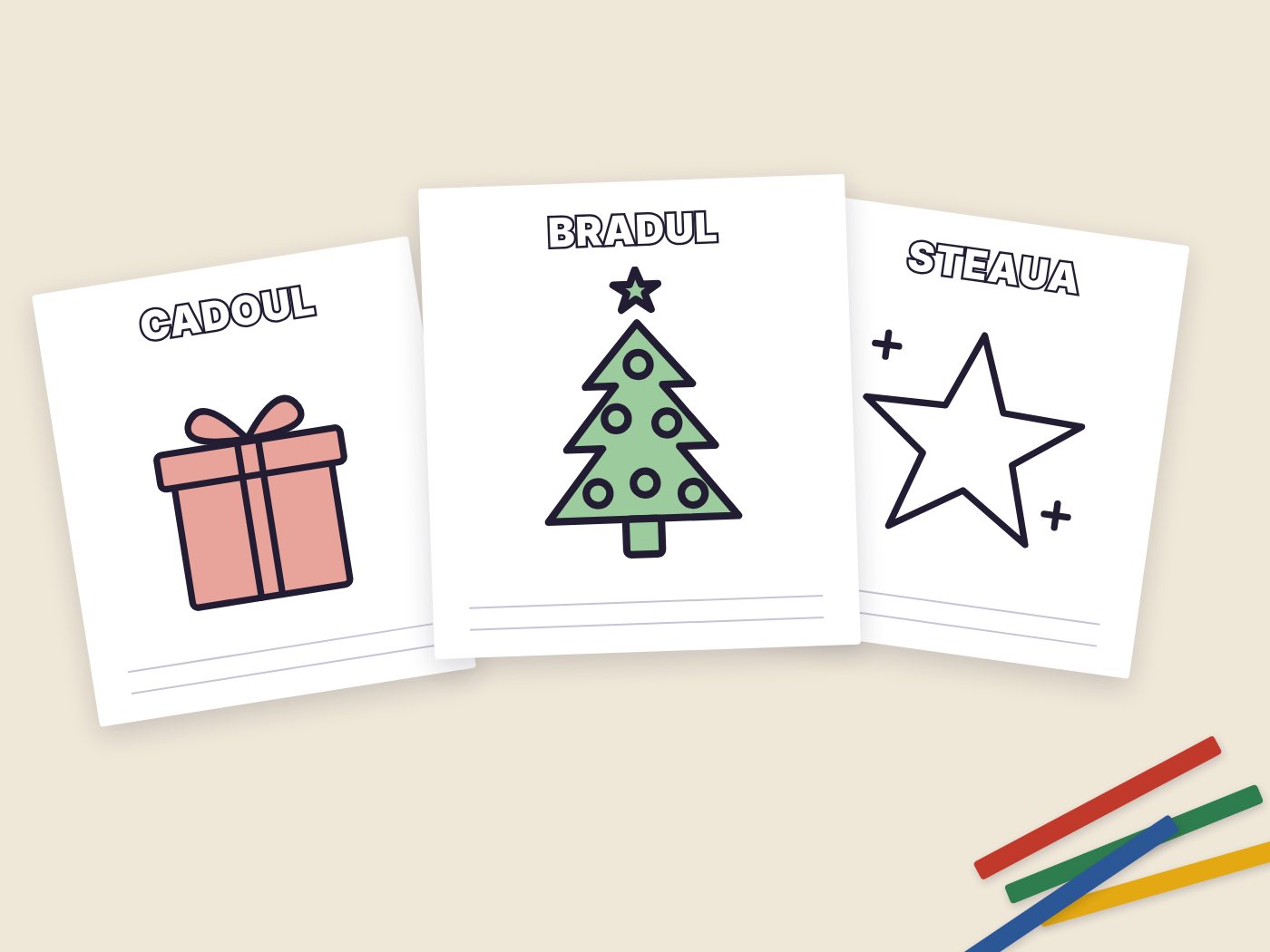
Christmas in the Classroom: Coloring Pages, Games, and a Skit About Giving
Eight Christmas coloring pages, each with a question for the child, 8 games for the classroom and kindergarten, and the skit “The Most Beautiful Gift,” ready to perform at your holiday show. All free and printable.
Christmas is the best time of year to talk with children about giving. Here you'll find, for free, eight Christmas coloring pages with questions about gifts that cost nothing, friendship, and gratitude, 8 games for the classroom and kindergarten, and the skit “The Most Beautiful Gift.”
A 2012 study showed that even children under two are happier when they give than when they receive. The materials below put this idea into practice during the last days of school before the holidays.
What Do You Do with Children at Christmas? 5 Situations
Choose the answer that seems right to you. After each situation you'll see an explanation, and at the end you'll get the coloring pages and the skit, for free.
This is not a psychological test. The answers come from this guide and its sources.
The child says they don't have money to buy Grandma a gift.
What do you tell them?
A gift that costs nothing, one the child puts their time or help into, is truly theirs. The “My gifts that cost nothing” list in the coloring pages helps them come up with ideas on their own.
A parent thinks a young child is too little to feel happy about giving something.
What did a 2012 study show?
In the study by Aknin, Hamlin, and Dunn, children under two showed more joy when they gave than when they received, and the most joy when they gave something of their own.
You want your students to be more grateful.
What works?
In a 2008 study, middle school students who spent two weeks writing about what they were grateful for showed more gratitude, more optimism, and fewer negative emotions.
The child is disappointed with the gift they received.
What do you do?
Disappointment is a perfectly okay emotion. Once they feel heard, the child can also see the good in what they received. Gratitude can't be forced. It has to be practiced.
At the holiday show, a child is afraid to speak on stage.
What do you do?
In the skit “The Most Beautiful Gift,” the elves say their lines together. Every child has a place on stage, even the one who is scared.
You got 0 out of 5 right.
You know how to turn Christmas into a lesson about giving.
Now all you need are the materials. Grab the coloring pages and the skit, ready to print.
You're on the right track.
Most good answers come from a single idea: the most beautiful gift is the one you give. The coloring pages and the skit put it into practice.
It's worth reading this page all the way through.
Christmas is the best time of the year to talk with children about giving. The games and worksheets below help you from day one.
Christmas Coloring Pages
Ten A4 pages: one page for the adult, eight drawings to color (Santa Claus, the tree, the gift, the snowman, the star, the bell, the mittens, the candle) and the “My Gifts Without Money” page.
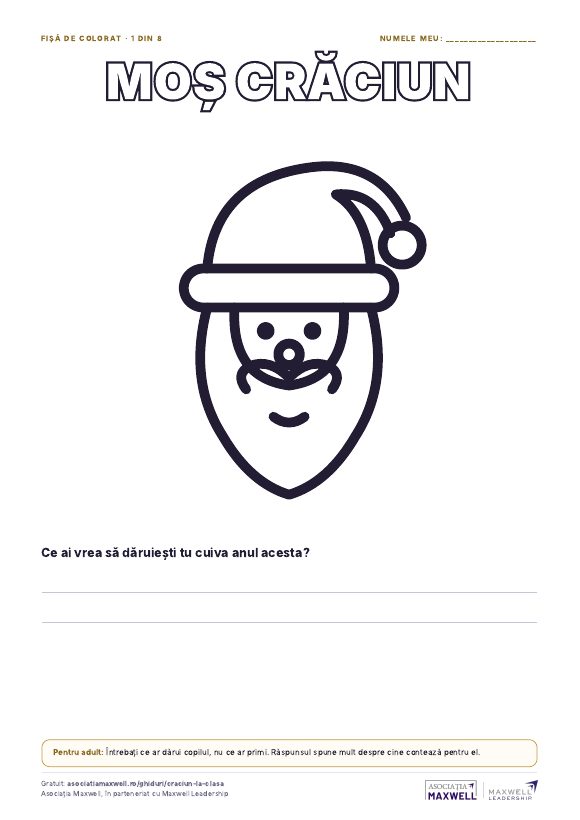
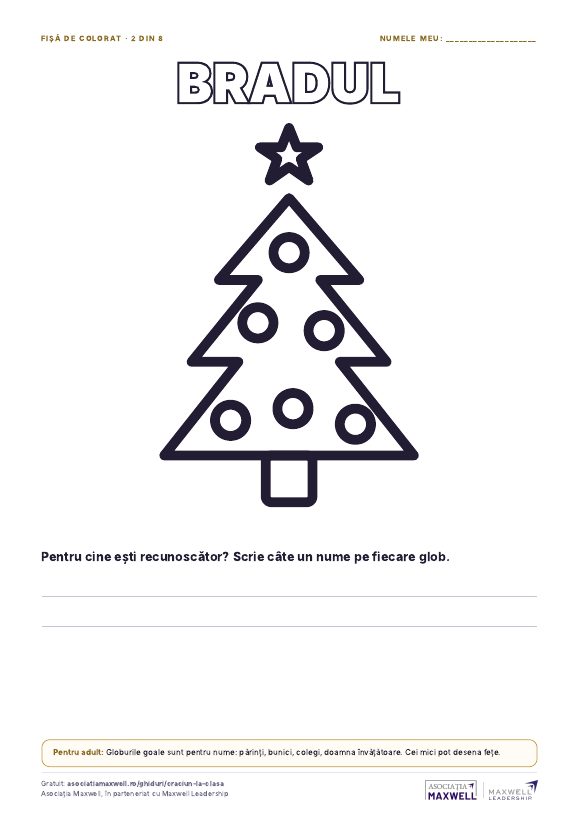
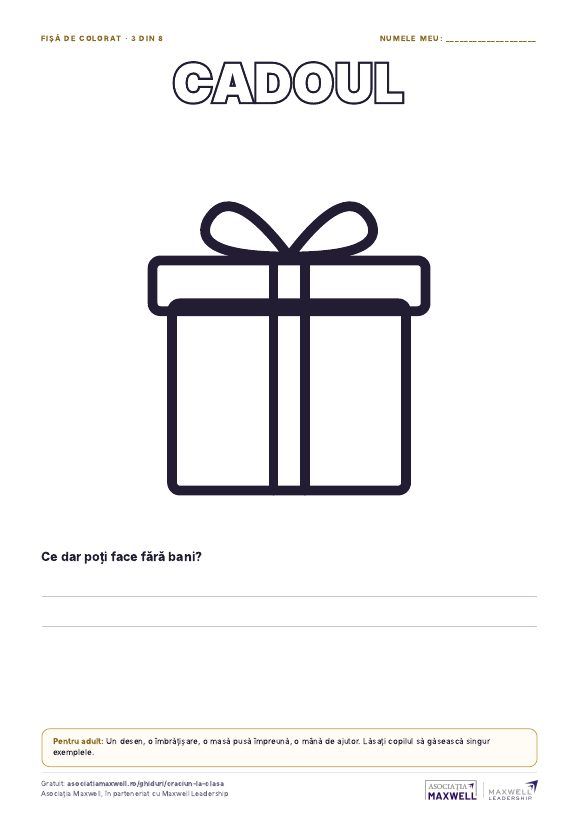
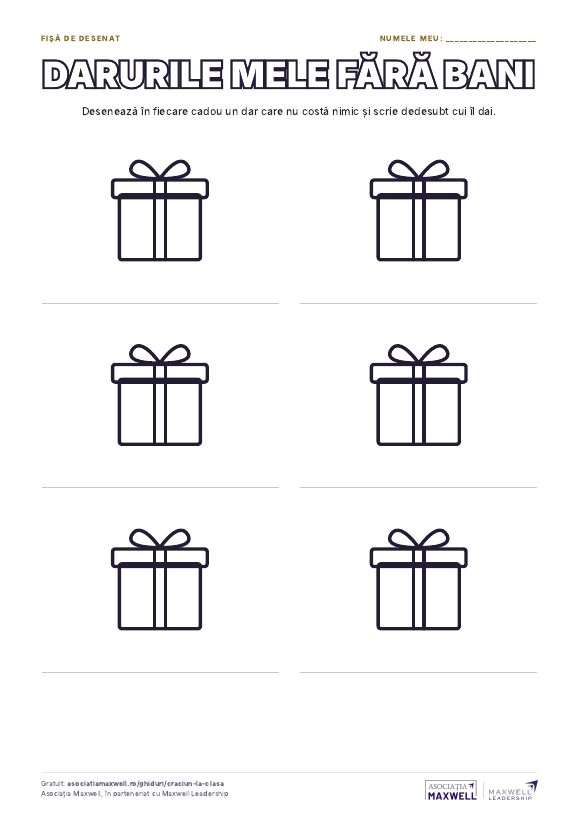
Printable Christmas Coloring Pages
Eight drawings with questions and the “My Gifts Without Money” page. Free, in PDF.
The Skit “The Most Beautiful Gift”
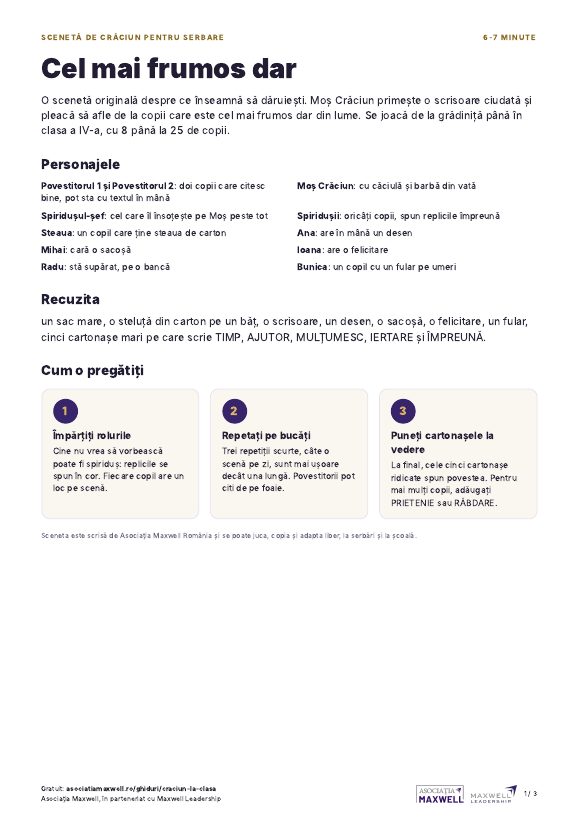
Santa Claus receives a strange letter: a child doesn’t want a toy, but wants to find out what the most beautiful gift in the world is. Santa sets off through town with the Star and the elves, and gets the answer from five children. Each one shows him a gift that can’t be bought: time, help, thank you, forgiveness and togetherness.
- 6-7 minutes, in three short scenes, plus a carol at the end;
- 8 to 25 children: the elves say their lines as a chorus, so every child has a place on stage;
- simple props: a sack, a cardboard star, five large cards and a few items from home;
- it can be performed, copied and adapted freely, from kindergarten through 4th grade.
8 Christmas Games for the Classroom
Our suggestions, for kindergarten and school. None of them require money or expensive materials.
1. The Gift Without Money
ages 5 and up, the whole class- Each child draws a classmate's name from a hat.
- By the last day of school, they make that classmate a gift that costs nothing: a drawing, a note, a good deed.
- On the last day, the gifts are given out one at a time, with a sentence: “I made this for you because...”
2. The Gratitude Tree
preschool and school- Draw a big Christmas tree on a sheet of paper or on the board.
- Each child cuts out a paper ornament and writes on it “Thank you for...”.
- The ornaments are glued onto the tree. Every morning, read a few of them out loud.
3. The Secret Elf
ages 7 and up, one week- Each child is secretly the elf for a classmate.
- For one week, they do a good deed for that classmate every day, without getting caught.
- On Friday, everyone guesses who their elf was.
4. Guess the Gift
ages 4 and up, in a circle- One child thinks of a gift that doesn't cost money, for example “I help my mom with the dishes.”
- They act it out, without words.
- The others guess. Whoever guesses right acts out the next gift.
5. The Class Star
ages 6 and up, 10 minutes- The children sit in a circle. One of them holds a cardboard star.
- They say one good thing the classmate on their right did this year and hand them the star.
- The star travels around the circle until it comes back to the start.
6. The Thank-You Letter
ages 7 and up, one hour- The class chooses someone at school who rarely hears “thank you”: the custodian, the security guard, the lady from the cafeteria.
- Each child writes or draws a sentence of thanks.
- They all go into one big card, delivered by two children.
7. The Chain of Good Deeds
preschool and school, until winter break- Every good deed done in class earns a strip of colored paper.
- The strips are linked into a chain, like the garland on a Christmas tree.
- Before winter break, measure the chain together: how long was the class's kindness?
8. The Carol in Parts
ages 6 and up, at the holiday program- Choose a carol the whole class knows.
- Divide the verses among groups; everyone sings the chorus.
- The group that isn't singing holds up cards with pictures from the coloring sheets.
Why It's Worth Talking About Giving
In a study published in 2012, children under the age of two showed more joy when they gave a piece of a snack to a puppet than when they received it themselves. They showed the most joy when they gave away something that was their own (Aknin, Hamlin, and Dunn, 2012).
Gratitude can be practiced, too. In a study of 221 sixth and seventh graders, those who spent two weeks writing about what they were grateful for showed more gratitude, more optimism, and fewer negative emotions than their classmates (Froh et al., 2008).
That's why the materials on this page don't ask “What are you getting for Christmas?” but “What are you giving?” and “What are you grateful for?”
A Plan for the Last Days of School
One week before the break, 20-30 minutes a day.
Day 1
Read the skit together and assign the roles. Start the Chain of Good Deeds.
Day 2
The “Gift” coloring page: what gift can you give without money? Draw names from a hat for the No-Money Gift.
Day 3
The Gratitude Tree and the “Tree” coloring page. Rehearse the first scene.
Day 4
The Thank-You Letter and the “Bell” coloring page. Rehearse scenes 2 and 3.
Day 5
The holiday show: the skit, the carol, the no-money gifts. Measure the Chain of Good Deeds.
At home, with the family
Make a list of no-money gifts
Fill out the “My No-Money Gifts” page from the coloring pages together: who we're giving to, and what.
Give something of their own
Your child can choose one of their own toys or books for someone in need. In the 2012 study, children were happiest when they gave away something of their own.
Say a “thank you” in the evening
At dinner, everyone names one thing they're grateful for today. It takes a minute.
Leave room for disappointment, too
If a gift isn't the one they wanted, listen. The feeling is okay, and they can still say “thank you.”
Frequently Asked Questions

The association's programs are based on the ideas of John C. Maxwell, author of more than 100 books on leadership. The idea that ties them together: influence is built on character, and character is formed early.
The “iChoose,” “iDo,” and “iLead” guides used in schools were created by his nonprofit foundation, Maxwell Leadership Foundation, and Asociația Maxwell România translated and adapted them for schools in Romania. About John C. Maxwell and the schools program.
Sorin Popa, President of Asociația Maxwell România and of Maxwell Leadership România.
Last reviewed: November 19, 2026. Written by the Asociația Maxwell România team.
Sources
The facts on this page come from the works below. The drawings, the skit, the games, and the plan are our own.
- Lara B. Aknin, J. Kiley Hamlin, and Elizabeth W. Dunn, “Giving Leads to Happiness in Young Children,” PLoS ONE, vol. 7, no. 6, 2012, e39211: children under two were happier when giving than when receiving, and happiest when they gave something of their own.
- Jeffrey J. Froh, William J. Sefick, and Robert A. Emmons, “Counting blessings in early adolescents: An experimental study of gratitude and subjective well-being,” Journal of School Psychology, vol. 46, no. 2, 2008, pp. 213-233 (presented by the author in “A Lesson in Thanks,” Greater Good): sixth and seventh graders who spent two weeks writing about what they were grateful for showed more gratitude, more optimism, and fewer negative emotions.
- The “Emotions Coloring Pages” guide from Asociația Maxwell România: eight faces to color, how to use them by age, and 6 games.
See also
Emotions Coloring Pages
Eight faces to color, how to use them by age, and 6 games.
See the coloring pages →Moral Values
What values are, kid-friendly examples, and how to nurture them at home and at school.
Read the guide →Empathy in Children
What it is, examples, and 12 empathy exercises for the classroom and for home.
Read the guide →Toate ghidurile noastre: Bullying în școli · Valori morale · Inteligența emoțională și stima de sine · Conflicte între copii și comunicare nonviolentă · Școala Altfel: idei de activități · Săptămâna verde: activități și reguli · Roata emoțiilor · Voluntariatul în educație · Comunicarea asertivă · Dezvoltare personală, clasele P - II · Regulile clasei · Empatia la copii · Fișe de colorat cu emoții · Formularul 230, pas cu pas · Calendarul de Advent al faptelor bune · Tabelul de recompense pentru copii · Scrisoarea către Moș Crăciun
Want to bring our lessons to your school?
Teachers in the MaxLeaders program teach classroom lessons on self-esteem, relationships, communication, and choices. Write to us and we'll tell you how your school can join the program.