

Beyond Exams: How Do We Prepare Children for Life?
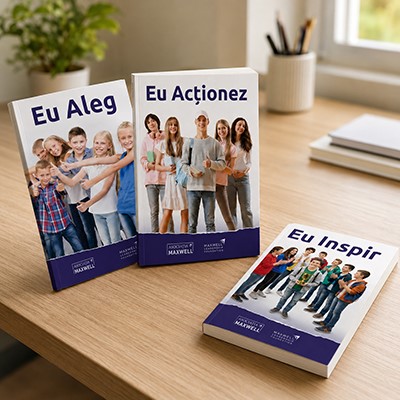
Starting this school year, students in grades 5-7 can take a new optional course on self-awareness, responsibility, relationships, resilience, and leadership: Education for Life: choose! act! inspire!
What's at stake isn't just another grade, but the way children learn to make choices when life doesn't give them multiple-choice answers.
by Florin Băcioiu | general manager, Asociația Maxwell România
There is a question no one can put off any longer: are we preparing children only to answer test questions correctly, or are we also preparing them for the moments when life doesn't give them an answer key?
A student may know a formula and, at the same time, not know how to handle rejection. They may be able to recite a definition but lack the courage to say “no” to peer pressure. They may get good grades and still feel overwhelmed by comparison, fear, or failure. These realities don't diminish the importance of academic knowledge. They simply show that it isn't enough.
Children today are growing up in an environment with instant access to information but less and less time for reflection. They are exposed early on to the public judgment of social media, to models of success that are hard to reach, and to constant pressure to perform. In this world, inner guideposts are not a luxury. They are a form of protection and independence.
A New Course for a Fundamental and Timeless Need
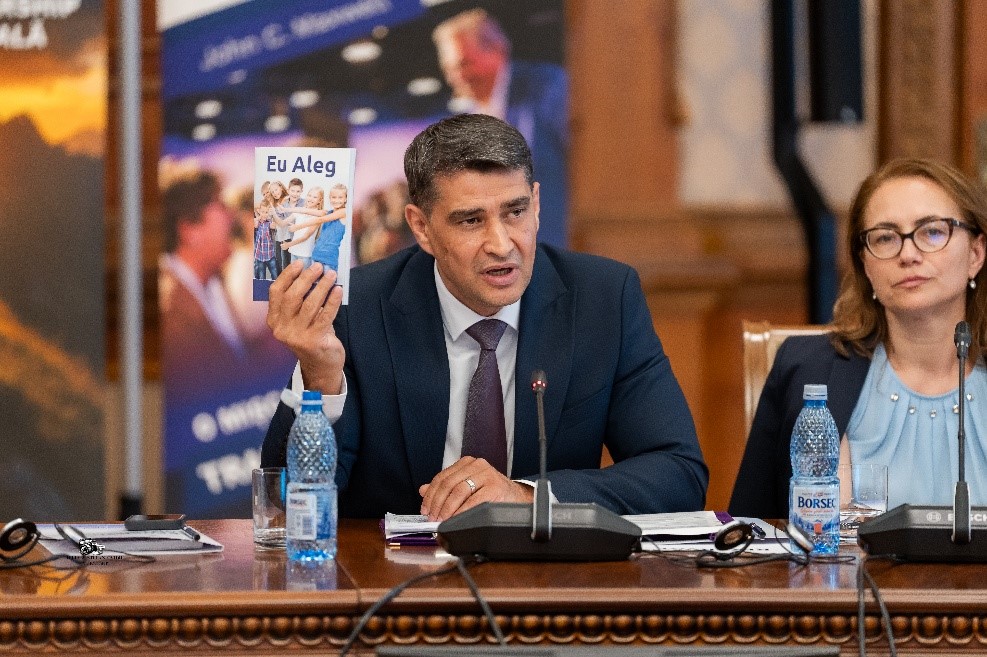
This is the context for the new optional course “Education for Life: choose! act! inspire!”, designed for grades 5-7. The curriculum was approved by Order No. 6.982 of the Minister of Education and Research of December 22, 2025, and applies starting with the 2026–2027 school year. The document was developed by Asociația Maxwell in collaboration with the Ministry of Education and Research.
The fact that we're talking about a new course doesn't mean the need is new. For generations, parents and teachers have tried to shape character, not just skills. What's new is that this mission now has a coherent curricular framework, adapted to middle school students, structured to ensure each student's step-by-step development over the 3 years, and built around situations students already face.
“Life won't ask children only to know things. It will ask them to choose: often under pressure, sometimes without help, and always with consequences.”
Why Middle School Is a Decisive Window
Between the ages of 11 and 14, identity begins to take shape, the voice of the group grows stronger, and emotions are felt intensely. This is the age when a single comment can carry enormous weight, a friendship can define a sense of belonging, and a seemingly small choice can open or close doors.
At this stage, it isn't enough to tell children what is right. We need to help them understand why it is right, recognize what is happening inside them, and practice healthy responses before the stakes get too high. Character isn't formed through a single memorable lesson, but through small choices that are repeated, reflected on, and owned.
Choose! Act! Inspire!
The structure of the curriculum follows the natural path of growing up:
| STAGE | WHAT STUDENTS PRACTICE |
|---|---|
| 5th Grade iChoose! |
Self-awareness, clarifying values, and grounding decisions in healthy personal principles. |
| 6th Grade iDo! |
Turning intentions into action, personal responsibility, collaboration, and perseverance. |
| 7th Grade iLead! |
Positive influence, collaborative leadership, resilience, and courage in the face of challenges. |
Summary based on the curriculum approved by Order No. 6.982/2025.
What a Class That Starts from Real Life Looks Like
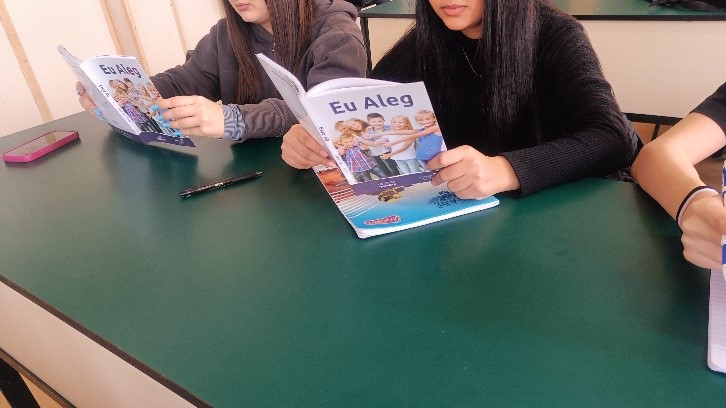
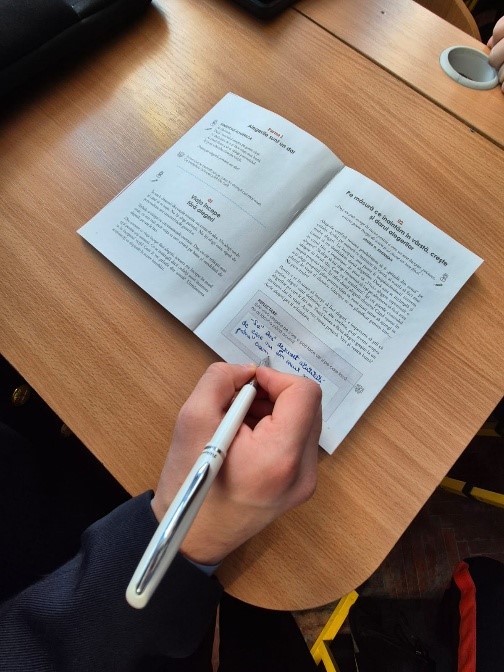
A course like this loses its meaning if it becomes just another traditional lecture-based class. The curriculum proposes case studies, role-playing, projects, creative exercises, and written reflections. Students don't just receive principles; they put them to work: they analyze a conflict, notice how they react under pressure, look for possible responses, and discuss the consequences.
A child may discover that anger is a signal, and that self-confidence doesn't come from other people's applause but is built through small promises kept to oneself. That a mistake calls for responsibility but doesn't cancel out their worth. That a conflict can be handled without humiliation, running away, or aggression.
These ideas seem simple only when viewed from a distance. In reality, they are the invisible infrastructure of maturity: they shape how a teenager learns, chooses friends, responds to failure, asks for help, and imagines the future.
School, Family, and Community: Partners in Shaping Children
A curriculum, however well designed, does not automatically produce change. The difference will be made by the teacher who creates a safe space, asks good questions, and avoids moralizing. By the time given to real conversation and by the consistency with which the school and the people around the child put into practice the values we talk about.
The role of the optional course “Education for Life: choose! act! inspire!” is: to provide language, reference points, and opportunities for practice; to help students notice earlier what they feel, what they choose, and what effect their actions have on others.
Of course, the family plays a decisive role. Character education begins at home and gains strength when the school, the family, and the community send compatible messages. A child learns responsibility not only by defining it, but by seeing it practiced by the important adults in their life.
How Will We Know If It Works
The excitement of the launch must be matched by honest evaluation. It is not enough to count the schools that choose the optional course. We need to track the quality of implementation: student participation, their capacity for reflection, the classroom climate, relationships, perseverance, and the way they handle difficult situations.
Some results will be subtle: a student who finds the courage to speak up; a child who apologizes without being made to; a teenager who can say what they feel without hurting anyone. Others will emerge over time. That is exactly why the course should not be sold as a miracle solution, but treated as a serious investment that requires patience, dedicated teachers, and collaboration.
A Choice for the World Our Children Will Live In
In the 2026–2027 school year, schools need to include “Education for Life: choose! act! inspire!” in their optional course offerings for grades 5-7. The decision is not about putting character in competition with academic performance. It is about understanding that performance without balance can turn into fragility, and information without discernment can become noise.
The real world “will ask” children for more than what they know. It will ask them who they are when things get hard, how they choose when they're under pressure, how they treat others when they have power, and how they get back up after they make mistakes.
The answers can't be improvised at 18. They are formed early on (in the family, at school, and in the community) by adults who have the courage to invest not only in results, but also in the person who achieves them.
Teachers should choose this optional course, first and foremost to give themselves the chance to have respectful, engaged students in front of them who are eager to learn. Second, because Asociația Maxwell provides the materials for classroom implementation free of charge: textbooks for all three years of study, the teaching methodology, an online support platform, free monthly personal development webinars for teachers led by nationally renowned trainers, and support from the association's specialists.
TRANSPARENCY NOTE
The author is the general manager of Asociația Maxwell România, the organization that created this optional course in collaboration with the Ministry of Education and Research.
SOURCES FOR EDITORIAL VERIFICATION
- Order of the Minister of Education and Research No. 6.982 of December 22, 2025: Portal Legislativ
- Press release of the Ministry of Education and Research of December 22, 2025: edu.ro