

Conflicts Between Children and Nonviolent Communication: How to Teach Them to Get Along
Children argue. It's normal, and it's how they learn to live alongside others. Here you'll find where arguments come from, how to tell them apart from bullying, and how to teach children to say what's bothering them without hurting anyone.
A conflict happens when two children want different things and don't yet know how to tell each other. It isn't a sign that something is wrong: it's an opportunity to learn. Nonviolent communication, the method of psychologist Marshall B. Rosenberg, teaches a child four steps: say what they see, what they feel, what they need and what they're asking for.
An argument between children of equal strength can be resolved by talking it through. Bullying, which happens repeatedly and in which one child is stronger, is not mediated: it calls for protecting the child and for the school to step in. And forgiveness can't be forced: it comes when the wrong has been acknowledged and made right.
What a Conflict Is
A conflict is a disagreement between two people who, at the same time, want things that don't fit together. With children, it looks like an argument over a toy, a seat, a rule or something someone said. But beneath every argument lies a need that the child doesn't yet know how to put into words.
That's why the useful question isn't “who started it?” but “what does each of them want?”.
A thing
“It's mine!” The toy, the phone, the seat at the desk.
Underneath: the need to have something of their own and to be asked.
A place in the group
“You can't play with us anymore.” Who sits with whom, who gets picked for the team.
Underneath: the need to belong and to matter.
Fairness
“That's not fair!” The rules of the game, who cheated, who started it.
Underneath: the need to be treated fairly.
A remark
“He laughed at me.” A joke, a nickname, a message.
Underneath: the need for respect.
The goal isn't a home or a classroom without arguments. The goal is for a child to be able to get through an argument without hitting, without insulting anyone and without giving in every time.
Argument or Bullying
This is the most important distinction in this guide, because the two are resolved in opposite ways.
| Argument | Bullying | |
|---|---|---|
| Who has the power | The children are about equally strong. | One is stronger: bigger, outnumbering the other or more popular. |
| How often | It happens every now and then. | It happens again and again, with the same child. |
| Purpose | Each one wants something for themselves. | One wants to hurt or humiliate the other. |
| How they feel | Both are upset. | One is afraid, the other isn't. |
| How it ends | They can make up, on their own or with a little help. | It doesn't stop without an adult. |
| What helps | Talking it out with each other, mediation. | Protecting the child and having the school step in, not mediation. |
If you recognize the right-hand column, don't put the two children face to face “to make up.” Read the guide on bullying in schools, where you'll find the signs, the steps to take and what the law says.
Nonviolent Communication, in Four Steps
Nonviolent communication is a method created by American psychologist Marshall B. Rosenberg. It starts from a simple idea: when I attack, the other person gets defensive and stops hearing me. When I say what I feel and what I need, there's a chance they'll listen to me. The method has four steps (PuddleDancer Press).
1. What I see
You say what happened, without labels and without “always” or “never.”
Instead of: “You're so selfish!”
“You took my pencils without asking.”
2. What I feel
You name your own feeling, not the other person's fault.
Instead of: “You made me mad!”
“I'm upset.”
3. What I need
You say what matters to you in this situation.
Instead of: “You don't care about anyone.”
“I need to be asked when it comes to my things.”
4. What I ask for
You ask for something clear that can be done right now. A request can also get a “no.”
Instead of: “Don't you ever do that again!”
“Next time, will you ask me first?”
“You took my pencils without asking. I'm upset. I need to be asked when it comes to my things. Next time, will you ask me first?”
The four steps put together, in the words of a 5th graderFor young children, Rosenberg used two animals. The jackal judges, blames and gives orders. The giraffe talks about what it feels and what it needs. The question “did you talk like the jackal or like the giraffe?” is easy to remember at any age.
The second half of the method is listening: you try to hear the same four steps in what the other person says, even if they don't say them nicely.
Forgiveness and Reconciliation
An argument isn't over when things have gone quiet. It's over when the two of them can sit next to each other again.
Forgiveness is
- A choice: I stop carrying the hurt around with me.
- Something I do for myself too, not just for the other person.
- Something that takes time. It doesn't come on command.
- Easier when the other person admits what they did and makes it right.
Forgiveness is not
- Forgetting. A child is allowed to remember what happened.
- Excusing what was done. “I forgive you” doesn't mean “it was okay.”
- An obligation to stay friends.
- A forced “I'm sorry,” mumbled while staring at the floor.
A real apology has three parts: “I did this,” “I understand how you felt,” and “here's how I'll make it right.” A child who learns to repair what they broke learns more than one who learns to say “sorry” quickly.
Forgiving yourself is part of the same lesson. A child who made a mistake and is left thinking “I'm a bad person” doesn't behave better next time. The one who behaves better is the child who can say “I made a mistake and I made it right.”
What the Research Says
Three different sources: a review of peer mediation among students, a review of school programs on emotions and relationships, and the studies conducted on our program.
When students are taught to mediate, most disputes end in an agreement
Peer mediations that ended in an agreement, out of 4,327 mediations tracked in 23 studies
Source: Burrell, Zirbel and Allen, Conflict Resolution Quarterly, 2003, with the figures as reported here. The studies come mostly from schools in the United States and look at mediation carried out by specially trained students for disputes between classmates. They do not address bullying.
270,034 students
Students who learned about emotions and relationships in class improved their social and emotional skills, their attitudes and their behavior.
topics higher at the end
In 2025-2026, students in the “iChoose” program scored higher at the end of the year than at the beginning on every topic.
among the biggest changes
along with fewer excuses and asking trusted adults for support, in the same 2025-2026 study.
Sources: Durlak and colleagues, Child Development, 2011, for the first box, and the CJRAE Hunedoara (County Center for Educational Resources and Assistance) study for 2025-2026, for the other two. The “iChoose” results are based on what students report about themselves, and the differences are small. See the limitations of the studies.
What You Can Do
Choose who you are. The steps are small, and you can start them with the very first argument.
If you're a parent
Don't look for someone to blame
“Who started it?” has two answers and no winner. Ask instead: “What happened?” and “What does each of you want?”
Listen to them one at a time
Each child tells their side without being interrupted. Often, the argument fizzles out simply because each of them was heard.
Say back what you heard
“You're upset because he knocked down your tower. And you wanted to play too.” Children learn the words from you.
Let them find the solution
“What can we do so it works for both of you?” A solution they come up with themselves lasts longer than one that's imposed.
Don't force an apology
A forced “I'm sorry” teaches a child to lie. Ask instead: “How will you fix what was broken?”
Show them how you argue
Your children see you when you disagree. If they also see you make up, they've learned the best lesson of all.
If you're a teacher
Separate them and let them calm down
No one solves anything while they're angry. Five minutes of downtime is not a punishment.
Hear both sides, away from the class
No audience. In front of their classmates, each student protects their image instead of looking for a solution.
Check whether it's an argument or bullying
If it keeps happening with the same child and the power isn't equal, don't mediate: follow the school's procedure.
Teach the four steps when things are calm
What I see, what I feel, what I need, what I'm asking for. Practice them with examples, not in the middle of a conflict.
Create a peace corner
A spot in the classroom, with the steps written on the wall, where two children can go to talk.
Use the ready-made lessons
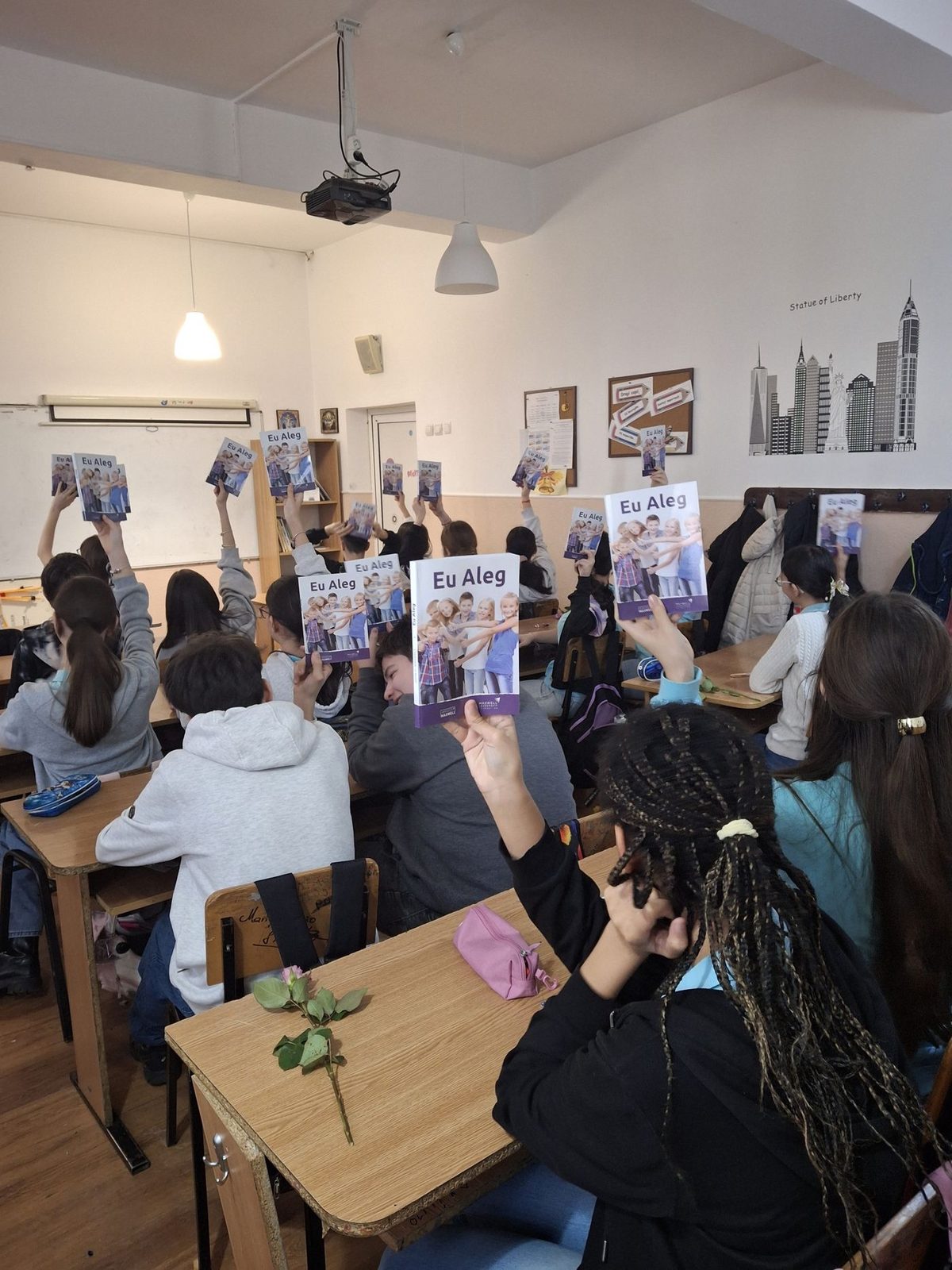
The MaxLeaders lessons “Forgiveness and Its Role in Resolving Conflicts” and “Nonviolent Communication” come with materials.
If you're a student
Stop
Take three breaths before you answer. What you say in anger, you can't take back.
Say what happened, not who they are
“You took my seat” can be worked out. “You're a jerk” can't.
Say what you feel and what you need
“I'm upset because I wanted to be asked.” It's harder to say than an insult. That's why it works.
Ask, don't order
“Would you...?” leaves room for an answer. When given an order, the other person gets defensive.
Listen, too
They have a story too. Maybe you didn't see all of it.
Get an adult when you need to
If you're scared, if it keeps happening, or if someone gets hit, it's not tattling. It's the right thing to do.
A Simple Mediation in Five Steps
For a parent, a teacher, or a classmate helping two children work things out. Only for arguments, not for bullying.
Calm
Everyone stops and takes a breath.
Each one tells their side
One at a time, with no interruptions.
Each one repeats
What they understood from the other's side of the story.
We look for solutions
As many as possible, without judging them.
We pick one
One that works for both. And tomorrow we see if it worked.
A child who can say what's bothering them no longer needs to show it with their fists, and one who knows how to listen keeps their friends.
What we do in schools
Two of the lessons that teachers in the MaxLeaders program teach in class are about conflict: “Forgiveness and Its Role in Resolving Conflicts” and “Nonviolent Communication.”
Figures counted by Asociația Maxwell România from the reports that teachers in the MaxLeaders program submit after each lesson. They update automatically.
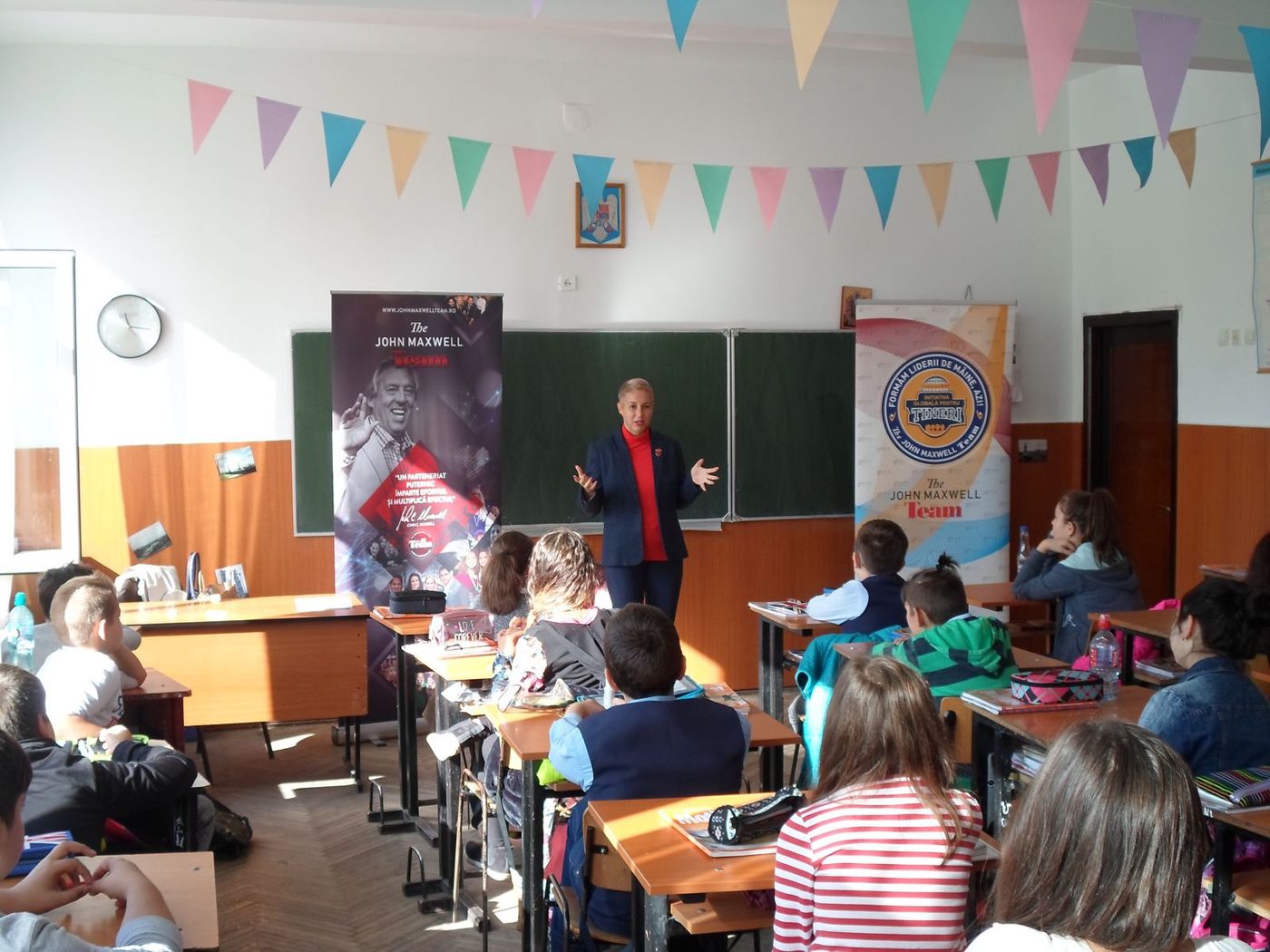
Lessons Students Live, Not Just Take Notes On
In these classes, students work on situations from their own lives: a fight at recess, a message that hurt, a broken friendship. Each of them picks one thing they'll do differently the next day.
The same themes come up in the “Education for Life” optional course for grades 5-7, which starts with self-awareness and builds up to how students treat others.
The lesson on forgiveness, one of the most frequently taught by teachers
Lessons reported by teachers in the MaxLeaders program, by topic (top six)
Source: reports from teachers in the MaxLeaders program, counted by Asociația Maxwell România.
Frequently Asked Questions
Where to get help
If the arguments keep happening with the same child, if someone is being hit, or if a child is afraid to go to school, it is no longer just an argument.
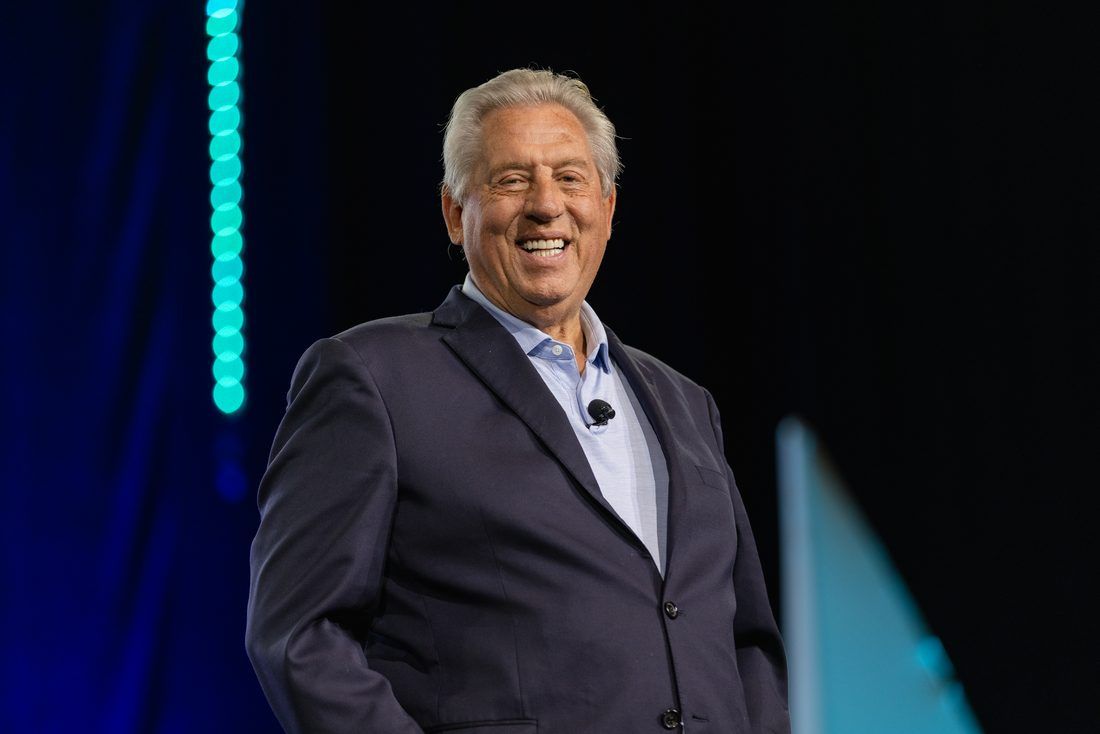
The association's programs are based on the ideas of John C. Maxwell, author of more than 100 books on leadership. The idea that ties them together: influence is built on character, and character is formed early.
The “iChoose,” “iDo,” and “iLead” guides used in schools were created by his nonprofit foundation, Maxwell Leadership Foundation, and Asociația Maxwell România translated and adapted them for schools in Romania. About John C. Maxwell and the schools program.
Sorin Popa, President of Asociația Maxwell România and of Maxwell Leadership România.
Last reviewed: November 13, 2026. Written by the Asociația Maxwell România team.
Sources
All the figures on this page come from here. The figures about the association's lessons are counted by us and are marked as such. The examples and steps are general guidance and do not replace advice from a specialist.
- PuddleDancer Press: “The 4 Components of Nonviolent Communication”: the four steps of nonviolent communication, the method of psychologist Marshall B. Rosenberg, described by the publisher of his book.
- Burrell, Zirbel and Allen, “Evaluating peer mediation outcomes in educational settings: A meta-analytic review”, Conflict Resolution Quarterly, 2003: a review of studies on the mediation of conflicts between students, carried out by students trained for it.
- Summary of the figures from the Burrell, Zirbel and Allen review, in a study on student mediators: 23 studies, 4,327 mediations, 4,028 ending in an agreement.
- Durlak, Weissberg, Dymnicki, Taylor, and Schellinger, “The impact of enhancing students' social and emotional learning,” Child Development, 2011: an analysis of 213 school-based social and emotional learning programs involving 270,034 students, from kindergarten through high school.
- CJRAE (County Center for Educational Resources and Assistance) Hunedoara: impact studies of the “iChoose” program: three annual reports, for the 2023-2024, 2024-2025, and 2025-2026 school years.
- Asociația Maxwell România: “iChoose” Impact Studies: a summary of the three reports, with the limitations of each and the full documents.
- Asociația Maxwell România: the “Bullying in Schools” guide: what bullying is under Romanian law and how to tell it apart from an argument.
See also
Bullying in Schools
What it is, how to recognize it, and what students, parents and teachers can do.
Read the guide →Emotional Intelligence and Self-Esteem
What they are, what they look like in children, and how to build them, at home and in the classroom.
Read the guide →Școala Altfel: Activity Ideas
20 themed ideas and a five-day plan, following the program's rules.
Read the guide →All our guides: Bullying in schools · Moral values · Emotional intelligence and self-esteem · Școala Altfel: activity ideas
Want the lessons on conflict in your school?
The lessons are taught in class by teachers in the MaxLeaders program. Write to us and we'll tell you how your school can join the program.