

Tele 8 TV
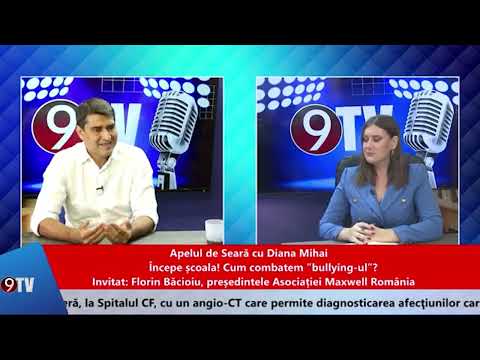
School is starting! How do we fight bullying? Apelul de seară, with Florin Băcioiu
September 11, 2023 On YouTube
One in two students in Romania say they have been bullied by their classmates. Here you'll find, in plain language, how to tell bullying apart from an argument, what the numbers show and what to do, step by step.
Bullying is repeated, intentional behavior in which a child or a group hurts, humiliates or excludes another child who cannot defend themselves. It has three hallmarks: the intent to cause harm, repetition and an imbalance of power. It can be physical, verbal, relational or online.
In Romania, 49% of students say they have been victims and 81% say they have been witnesses (Salvați Copiii România, 2022). It rarely goes away on its own: it usually stops when an adult steps in and when classmates stop staying silent. Law no. 221/2019 prohibits it in schools, and every school must have an anti-bullying action group. For advice, Telefonul Copilului is available at 116 111, free of charge.
The word comes from English and has no single equivalent in Romanian. It is called harassment, intimidation or, in the law, psychological violence. Not every argument between children is bullying, and neither is every bad joke. It becomes bullying when three things come together.
It is not an accident and it is not play. The goal is to make the other child suffer, feel small or be left out.
It happens again and again, to the same child. The child being bullied comes to dread the next day.
The one doing the bullying is older, stronger or more popular, or has the group on their side. The other child cannot defend themselves alone.
| Argument between children | Bullying | |
|---|---|---|
| Who has the power | The children are about equally strong. | One or more are stronger: physically, in numbers, or in their standing in the group. |
| How often | It happens once or every now and then. | It keeps happening to the same child for days or months on end. |
| What the goal is | Each side wants to be right or to get something. | The goal is to hurt, humiliate, or push the other child out of the group. |
| How it ends | They usually make up and stay classmates. | It rarely stops on its own. An adult needs to step in. |
Most of the time they show up together: a nickname used in class carries on in the evening, in the group chat on the phone.
Hitting, shoving, tripping, belongings taken or broken.
It's the easiest form to spot. It often comes after words and exclusion, not at the start.
Nicknames, insults, threats, repeated jokes at the same child's expense.
In PISA 2022, 15-year-old students in Romania said that what happens to them most often is being made fun of or having rumors spread about them.
Being left out of the group, rumors, “don't talk to him,” being deliberately ignored.
It leaves no marks and is hard for adults to notice. The child ends up alone during breaks and activities.
Hurtful messages, photos shared without consent, group chats the child is kicked out of or mocked in.
It doesn't stop at the school gate. It follows the child home, on their phone, at any hour, and many people can see it.
Three different measurements, carried out by different organizations. The questions aren't the same, so the figures can't be compared with each other, but they all say the same thing: it's an everyday problem.
Percentage of students answering “yes” in the two Salvați Copiii România surveys
Source: Salvați Copiii România, press release of March 28, 2024, and Edupedu.ro. The 2022 survey was conducted online among 4,449 students aged 10-18, using the same method as the 2016 study. In the same survey, 27% of students said they had bullied others themselves.
15-year-old students bullied at least a few times a month (PISA)
Source: Edupedu.ro, on PISA 2018 and PISA 2025. The bars are drawn on a scale from 0 to 50%.
Adolescents aged 11, 13 and 15 in 44 countries and regions who have been bullied online (WHO, HBSC study)
Source: WHO Europe, HBSC 2021/2022, Volume 2, with figures from the coordinating center's presentation. In the same study, 11% of adolescents said they had been bullied at school. The bars are drawn on a scale from 0 to 50%.
of the students in the Salvați Copiii România survey say they stepped in on the side of the classmate being bullied. Bystanders are the largest group and can make the biggest difference.
students say they have been in these situations often or very often. For these children, school has become a place they fear.
is the gap, according to the PISA 2022 report for Romania, between students threatened by classmates at least a few times a month and those threatened a few times a year or less.
Sources: Salvați Copiii România survey, 2022, and PISA 2022 report for Romania.
Most incidents happen with no adults around. That's why what matters is the changes you notice in the child, not what you happen to see with your own eyes.
A single sign doesn't mean bullying. Several of them, showing up around the same time, are a good reason to start a calm conversation. The child who bullies needs help too: they have often learned this behavior somewhere.
Choose who you are. The steps are listed in the order they're worth taking.
No one deserves to be humiliated, no matter how they look, what grades they get, or what they've said.
A parent, homeroom teacher, school counselor, coach. Asking for help is not snitching. You snitch to get someone in trouble. You ask for help to stop something harmful.
Responding with violence gives the other person what they're after and can make you the one who gets blamed.
If you're being harassed online, take screenshots, then block and report the account.
When you're with others, you're harder to bully and you have someone to tell.
Go stand next to the classmate being bullied, get them out of the situation, and tell an adult. The group's silence is what keeps the bully going.
No interrupting, no “well, what did you do to them?” Your child first needs to be believed.
If you said you won't do anything without telling them, stick to it. Trust is hard to earn and can be lost in a day.
What happened, when, where, and who was there. With the facts in writing, the school has something to start from.
Ask, in writing, for the situation to be referred to the school's anti-bullying action group.
It can make things worse for your child. The safe way goes through the school.
Don't humiliate them in turn. Say clearly that this behavior stops, find out what's driving it, and work with the school.
Calmly and firmly, with no interrogation in front of the class. Whatever you let slide, the class takes as permission.
First with the child being bullied, then with the one doing the bullying, then with the bystanders. Don't bring them face to face to “make up.”
The legal regulations require every school to have such a group, with a plan and intervention procedures.
Bullying is a group problem. Class rules are written together with the students, and they're kept.
When classmates stop laughing and stop staying silent, bullying loses its audience.
Self-esteem, respect, and the way we talk to each other are learned, like anything else.
A child who knows their own worth doesn't need to make someone else feel small and doesn't easily believe what others say about them.
De aceea, pe lângă reguli și pedepse, prevenirea începe cu lucruri care par fără legătură: stima de sine, respectul și celelalte valori, felul în care alegem și felul în care ne certăm. Elevii din proiectele noastre au spus-o chiar ei, în dezbateri: încrederea în sine îi ajută să nu ia în seamă jignirile, iar ce au învățat a fost să vorbească, să ceară ajutor și să lucreze în echipă.
Since 2019, bullying has been named and prohibited by law. Law no. 221/2019 introduced the concept of psychological violence, that is, bullying, into the education law and banned it in schools and in all spaces intended for education.
The implementing rules were approved by order of the Minister of Education and published in the Official Gazette (Monitorul Oficial) on June 10, 2020. They require every school to have:
In short: as a parent, you can ask the school, in writing, to look into the situation. As a teacher, you have a duty to intervene.
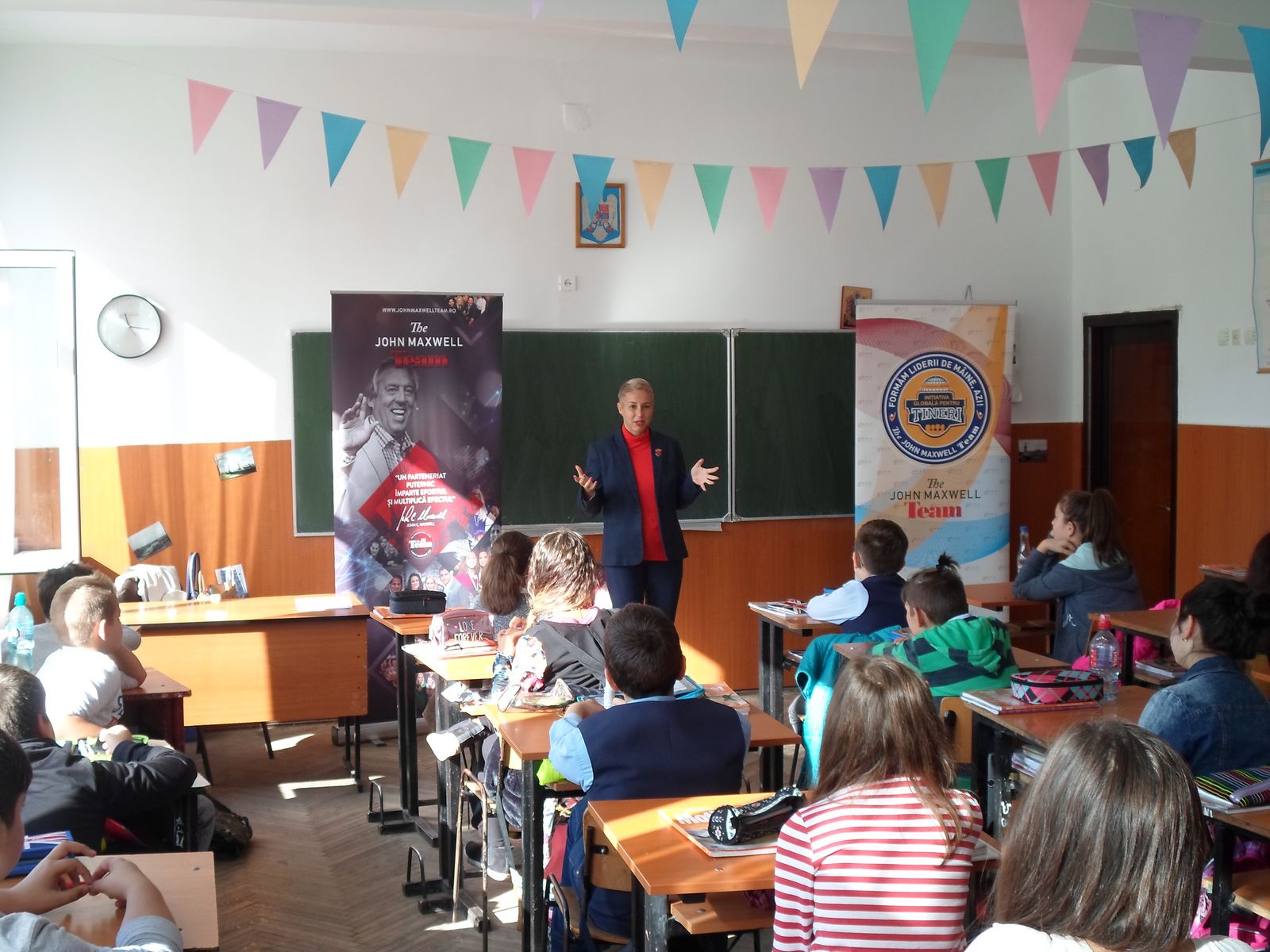
Asociația Maxwell România has been working with students on this topic since 2021, through the project “How to Deal with Bullying” and through lessons taught by teachers in the classroom.
Figures counted by Asociația Maxwell România from the reports that teachers in the MaxLeaders program submit after each lesson. They update automatically.

The project ran for several editions between 2021 and 2023. Middle school students take part in a series of sessions in which those who bully learn how much harm they cause, and those who are bullied learn what steps to take and why they should ask an adult for help.
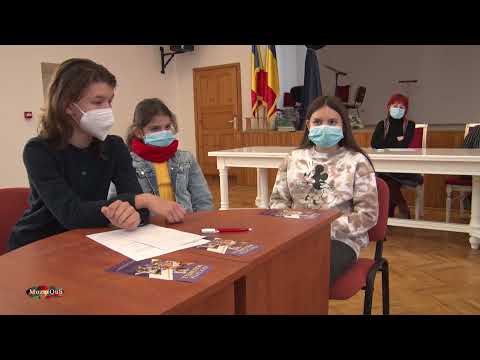
In Timișoara, the 2021 and 2023 editions each ended with a student debate about forms of harassment, from verbal to online, and about how you can respond. In 2021, the debate featured students from Middle Schools No. 6 and No. 16, and in 2023, students from Schools No. 21 and No. 24, held at Colegiul Național “Constantin Diaconovici Loga”. The debates were filmed by local TV stations, and you can find them below.
Lessons reported by teachers in the MaxLeaders program, by topic (top six)
Source: reports from teachers in the MaxLeaders program, counted by Asociația Maxwell România.
The debates and TV programs about the project. Each one has its own page with a summary.



If you or your child are going through this right now, you don't have to handle it alone.
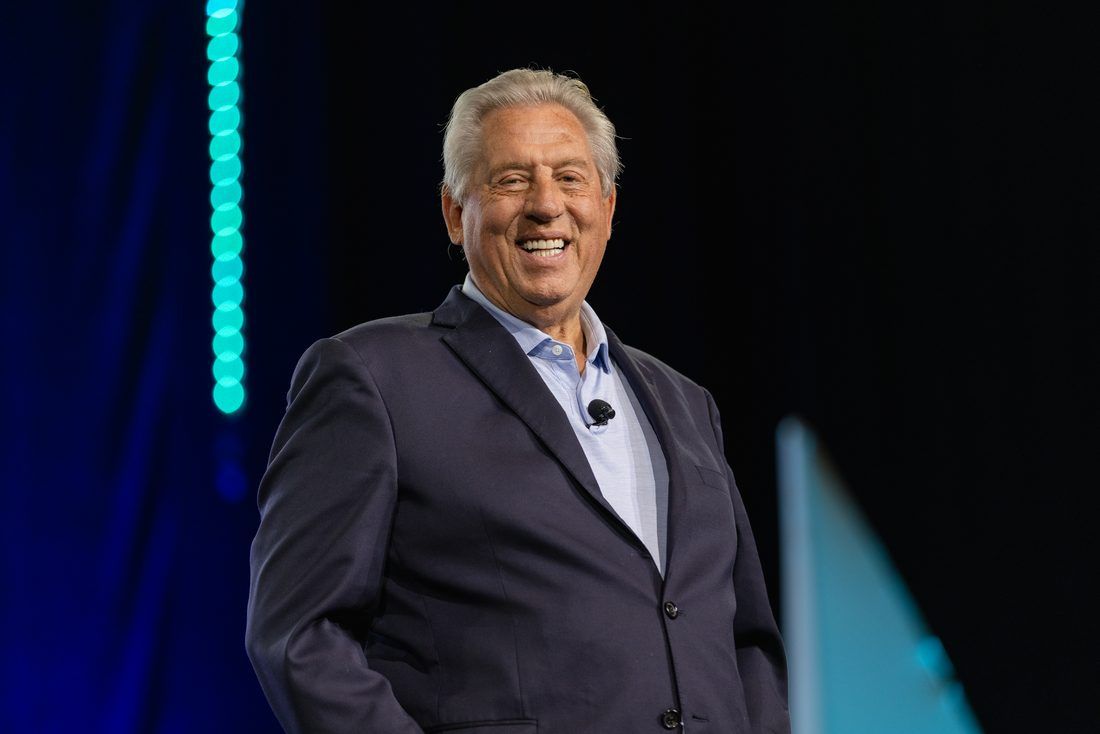
The association's programs are based on the ideas of John C. Maxwell, author of more than 100 books on leadership. The idea that ties them together: influence is built on character, and character is formed early.
The “iChoose,” “iDo,” and “iLead” guides used in schools were created by his nonprofit foundation, Maxwell Leadership Foundation, and Asociația Maxwell România translated and adapted them for schools in Romania. About John C. Maxwell and the schools program.
Sorin Popa, President of Asociația Maxwell România and of Maxwell Leadership România.
Last reviewed: November 12, 2026. Written by the Asociația Maxwell România team.
All the figures on this page come from these sources. Figures about the association's lessons are counted by us and are marked as such. The signs and steps are general guidance and do not replace the advice of a specialist.
The association's programs for schools at a glance: the optional course, the guides and the lessons taught by teachers.
See the programs →An optional course for grades 5-7, approved by the Ministry of Education and Research, about values, choices and responsibility.
About the optional course →What changed for students who completed the guide, measured every year by CJRAE (County Center for Educational Resources and Assistance) Hunedoara.
See the results →The lessons are taught in class by teachers in the MaxLeaders program. Write to us and we'll tell you how your school can join the program.