

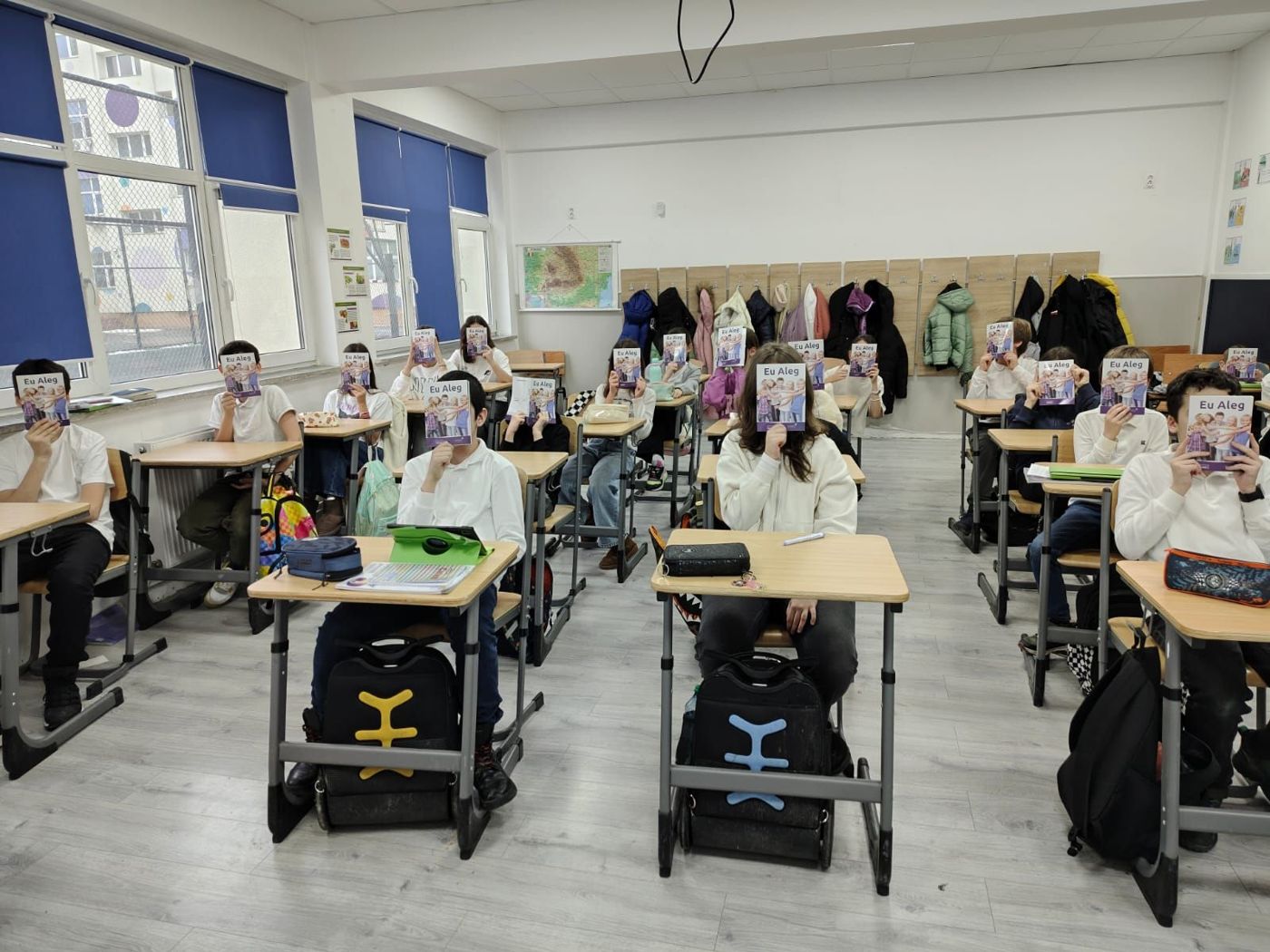
Moral Values: What They Are, Examples, and How to Teach Them to Children
We all want children who are respectful, honest, and responsible. Here you'll find, in plain language, what values are, what they look like in a child's actions, and how they're learned, at home and in the classroom.
Moral values are the beliefs about what is right and what is wrong that guide the choices a person makes. Respect, honesty, responsibility, and kindness are the best known. A rule comes from outside. A value is your own, and it keeps you on the right path even when no one is watching.
Children first learn them from what they see in adults, then from conversations and from small, repeated actions. Education Law no. 198/2023 places values such as respect, integrity, and responsibility at the foundation of school. And values can also be learned in the classroom: in studies conducted by CJRAE Hunedoara, students who completed the “iChoose” guide had higher scores at the end of the year than at the beginning on all 16 topics.
What Moral Values Are
A value is something you care about so much that you choose your actions based on it. Moral values are the ones that concern right and wrong: how you treat others, what you do when no one is watching, what you choose when the easy thing and the right thing are not the same.
You can recognize them by three things.
They show in actions
A value you only talk about is a wish. It becomes a value when it changes the way you behave.
They cost something
Telling the truth when it suits you is easy. A value shows when the truth costs you.
They are chosen
They can't be imposed. A child can be made to follow a rule, but a value has to become their own.
Rule or value?
| Rule | Value | |
|---|---|---|
| Where it comes from | From outside: it's set by the parent, the teacher, or the school. | From within: the child has understood why it matters and has chosen it. |
| When it works | As long as someone is watching. | Even when no one is watching. |
| The question it asks | “Am I allowed?” | “What kind of person do I want to be?” |
| What happens when it's broken | A consequence comes from the adult. | The child feels on their own that they did something wrong and wants to make it right. |
Children need both. Rules keep them safe while they're little. Values keep them on the right path when the rules aren't around: at recess, online, with their friends, and later on at work.
12 Examples of Moral Values
Each one with what it means and what it looks like in a child. The list isn't closed: every family and every school chooses its own words.
Respect
You treat the other person as someone who matters, even if you disagree with them.
In a child: Listens without interrupting and doesn't laugh at a classmate who makes a mistake.
Honesty
You tell the truth and don't take what isn't yours.
In a child: Admits to breaking something, even if no one saw.
Responsibility
You do what you promised and own the consequences of what you did.
In a child: Does their part in the group project and doesn't blame others.
Kindness
You do good without expecting anything in return.
In a child: Shares their lunch with a classmate who doesn't have one.
Empathy
You try to understand what the other person is feeling.
In a child: Notices a classmate sitting alone at recess and goes over to them.
Courage
You do what's right even when you're afraid or you're the only one.
In a child: Says “that's not okay” when the group laughs at someone.
Forgiveness
You let go of revenge and give the other person a chance to make things right.
In a child: Makes up after a fight and doesn't stay upset for days.
Gratitude
You notice the good you've received and say so out loud.
In a child: Says thank you without being reminded.
Perseverance
You keep going when it's hard and when it doesn't work out the first time.
In a child: Tries the problem they got wrong one more time.
Fairness
The same rules for everyone, including you.
In a child: Doesn't cheat at games and admits it when they've lost.
Generosity
You give from what you have: time, attention, things.
In a child: Helps a classmate with homework, even though they could be playing.
Patience
You can wait, and you can work for something that comes later.
In a child: They wait their turn and don't give up on a game just because it takes a while.
What the Numbers Say
Two different measurements: what adults in Romania think an educated child is, and what changes in students who learn about values in class.
“What does an educated child mean to you?”
Open-ended answers, with multiple answers allowed, in the IRES survey from March 2021 (1,303 people)
Source: the IRES survey “Public Perception of Early Education in Romania,” commissioned by the Step by Step Center, via Edupedu.ro and HotNews.ro. The bars are drawn on a scale from 0 to 50%.
Values Can Be Learned in Class
Topics from the iChoose guide on which students in the program scored significantly higher than the control group, out of 16
Source: the CJRAE Hunedoara (County Center for Educational Resources and Assistance) reports, summarized on the iChoose Impact Studies page. The results are based on what students say about themselves, and the control groups were small.
From the Beginning to the End of the Year
Overall average of students in the program, on a scale from 1 to 5, in the 2025-2026 school year
Source: the CJRAE Hunedoara study for 2025-2026, with 6,193 responses to the initial assessment and 4,470 to the final one, from 22 counties and Bucharest. The difference is small, and the study says so. See the study's limitations.
What the survey shows: adults put visible behavior first (respect, “good home training”), and honesty is rarely mentioned. That doesn't mean it doesn't matter to them. It means that when we think of an educated child, what comes to mind first is how they behave toward us, and only then what they do when we're not watching. That is where values do their work.
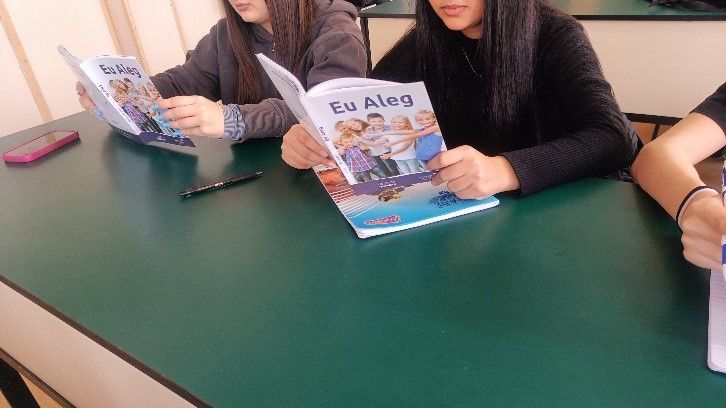
Values in Education Law
Values are not just a family matter. Pre-University Education Law No. 198/2023 states, in Article 2, the values that schools in Romania are built on. Among them:
Under integrity, the law speaks of value benchmarks in education: honesty, responsibility and ethical conduct.
In short: when a teacher talks in class about respect or honesty, they are not straying from the curriculum. They are doing what the law asks of them.
How Values Are Learned, by Age
The same value is learned differently at 5 and at 15. The breakdown below is general guidance: every child has their own pace.
Ages 3-6
They learn from what they see
Simple words for good deeds (“you shared, that's what being generous means”), stories, and a few rules that everyone in the home follows.
Ages 7-10
They ask “why?”
Short explanations for every rule, chores of their own around the house, and conversations about what characters in books and movies did.
Ages 11-14
They compare what you say with what you do
Real dilemmas, discussed without preaching: what would you have done? This is the age when their circle of friends starts to matter a lot.
Ages 15-18
Chooses their own values
Trust, real responsibility and conversations as equals. Volunteering and projects show them they can make a difference.
What You Can Do
Choose who you are. The steps are small, and you can start today.
If you're a parent
Choose three family values
Not twenty. Three, named out loud and repeated: “in our house, we tell the truth.”
Live them where they can see
Your child sees how you talk to the cashier, to their grandparents and behind the wheel. That is the lesson.
Name the action, not the child
“You told the truth, even though it was hard” teaches them more than “you're a good kid.”
Let them make it right
When they make a mistake, ask “how can you make it right?” before “what's your punishment?”
Talk about choices, not just grades
At dinner, besides “what grade did you get?”, ask “what good did you do for someone today?”
Admit it when you're wrong
“I raised my voice, and I'm sorry” teaches them both honesty and forgiveness.
If you're a teacher
Write the class rules together
Rules that students helped write are their rules. Connect each rule to a value.
One value a month
One value, one story, one discussion, one small act to do by next week.
Use dilemmas
“You found a wallet in the schoolyard. What do you do?” Let students speak before you do.
Point out good deeds out loud
One sentence in front of the class about an act of fairness does more than an hour of theory.
Ask for a small step, not a big promise
Just one thing to change, chosen by the student, checked a week later.
Use homeroom periods and optional courses
The “Education for Life” optional course and the MaxLeaders lessons come with ready-made materials.
If you're a student
Write down three things that matter to you
Not what you think you're supposed to write. What truly matters.
Look at one of your days
Where did you do what matters to you, and where didn't you? That's what you need to work on.
Choose just one thing to change
A small one you can do tomorrow. Big changes start with one small thing, done every day.
Choose your friends by how they act
Not by how popular they are. You end up becoming like the people you spend time with.
Say “no” without arguing
“I don't do that” is enough. You don't owe anyone a long explanation.
When you make a mistake, make it right
Everyone makes mistakes. What makes the difference is what you do afterward.
Values aren't taught like a lesson. They are chosen, lived, and passed on.
„Valorile morale sunt fundația calității vieții adultului.”
Sorin Popa, președintele Asociației Maxwell România și al Maxwell Leadership RomâniaDe 15 ani ținem cursuri pentru adulți în România și, de fiecare dată, vorbim despre cât de mult contează valorile în viața unui om: la serviciu, în familie și în felul în care se poartă cu el însuși. Părinții cu care am lucrat în companii au fost cei care ne-au inspirat să pornim programele de valori pentru copii. Ce un adult repară cu greu, un copil poate învăța de la început.
John C. Maxwell, a cărui fundație a creat ghidurile din care a pornit programul nostru pentru școli, spune că valorile bune formate de mic îi dau unui copil o bază de stabilitate pentru toată viața. De aceea programul începe cu alegerea: întâi elevul află ce contează pentru el, apoi trece la fapte, apoi îi inspiră pe alții. Mai multe despre John C. Maxwell și programul pentru școli.
What we do in schools
Asociația Maxwell România brings values-based education into the classroom in three ways: a three-year optional course, guides for students, and lessons taught by teachers.
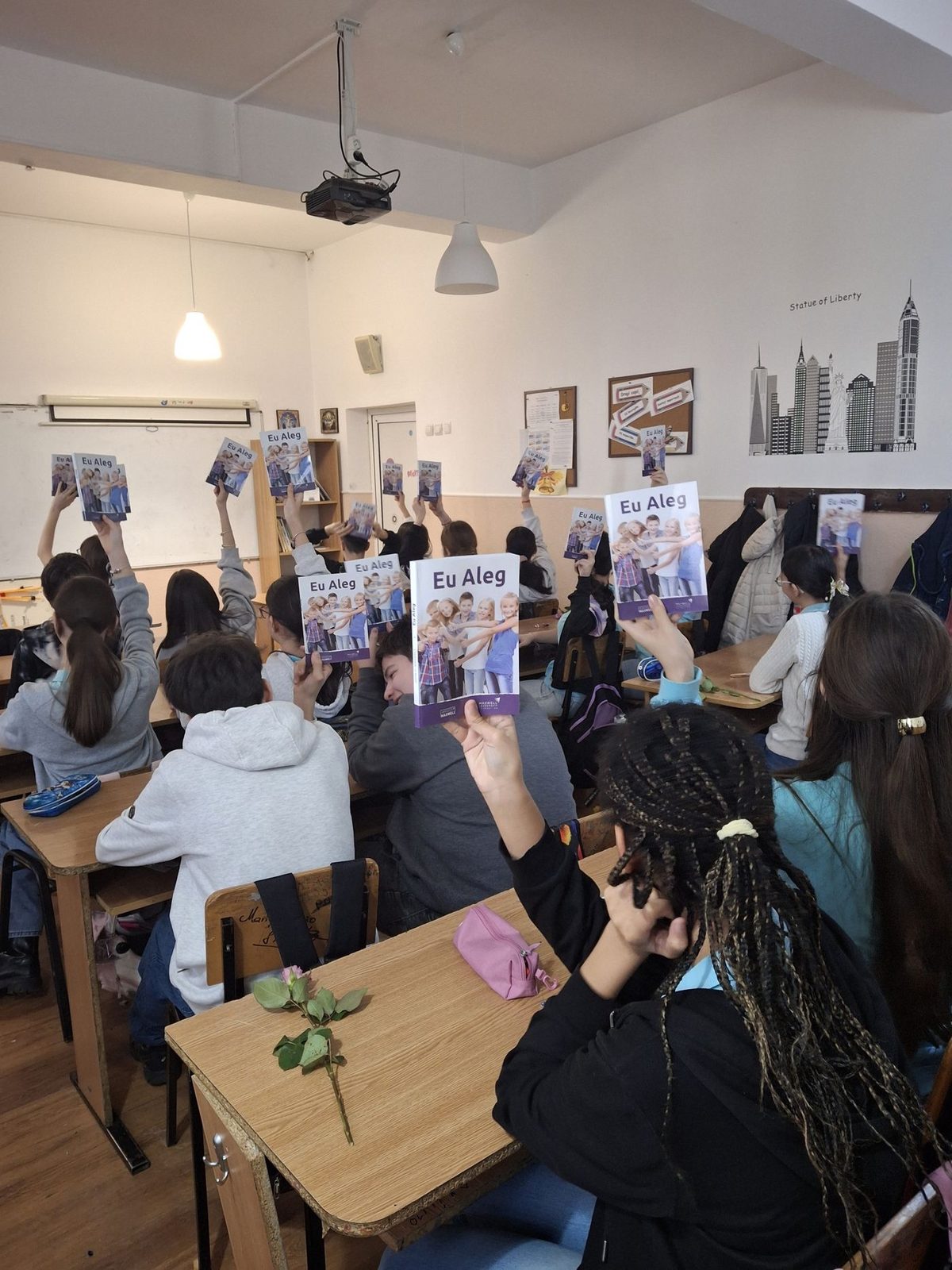
The “Education for Life” Optional Course
It is an optional course for grades 5-7, with a curriculum approved by the Ministry of Education and Research through OMEC (order of the Romanian Minister of Education and Research) No. 6.982/2025. It spans three years and three steps:
- iChoose (5th grade): self-knowledge, clarifying values, and making decisions based on sound personal principles
- iDo (6th grade): from intentions to actions, with responsibility, collaboration, and perseverance
- iLead (7th grade): positive influence, resilience, and courage in the face of hardship
This isn't a class where the teacher talks and the students take notes. Students look at themselves and choose one thing to change.
Figures counted by Asociația Maxwell România from the reports that teachers in the MaxLeaders program submit after each lesson. They update automatically.
The topics teachers cover most often
Lessons reported by teachers in the MaxLeaders program, by topic (top six)
Source: reports from teachers in the MaxLeaders program, counted by Asociația Maxwell România.
Frequently Asked Questions

The association's programs are based on the ideas of John C. Maxwell, author of more than 100 books on leadership. The idea that ties them together: influence is built on character, and character is formed early.
The “iChoose,” “iDo,” and “iLead” guides used in schools were created by his nonprofit foundation, Maxwell Leadership Foundation, and Asociația Maxwell România translated and adapted them for schools in Romania. About John C. Maxwell and the schools program.
Sorin Popa, President of Asociația Maxwell România and of Maxwell Leadership România.
Last reviewed: November 12, 2026. Written by the Asociația Maxwell România team.
Sources
All the figures on this page come from these sources. Figures about the association's lessons are counted by us and are marked as such. The examples, ages, and steps are general guidance and do not replace advice from a specialist.
- Edupedu.ro, on the IRES survey “Public Perception of Early Education in Romania”: survey conducted March 1-3, 2021, among 1,303 people, commissioned by Centrul Step by Step.
- HotNews.ro, on the same IRES survey: the main figures: respect, “good home upbringing,” and school performance.
- Legea învățământului preuniversitar nr. 198/2023: articolul 2, cu valorile pe care se sprijină sistemul de învățământ (textul din Portalul Legislativ al Ministerului Justiției).
- CJRAE (County Center for Educational Resources and Assistance) Hunedoara: impact studies of the “iChoose” program: three annual reports, for the 2023-2024, 2024-2025, and 2025-2026 school years.
- Asociația Maxwell România: “iChoose” Impact Studies: a summary of the three reports, with the limitations of each and the full documents.
- Asociația Maxwell România: John C. Maxwell and the schools program: where the “iChoose,” “iDo,” and “iLead” guides come from and what their author says about values.
See also
Emotional Intelligence and Self-Esteem
What they are, what they look like in children, and how to build them at home and at school.
Read the guide →Bullying in Schools
What it is, how to recognize it, and what students, parents and teachers can do.
Read the guide →The “Education for Life” Optional Course
An optional course for grades 5-7 about values, choices and responsibility.
About the optional course →Want values-based education in your school?
The “Education for Life” optional course is free for schools. Write to us and we'll tell you how your school can join the program.