

Emotional Intelligence and Self-Esteem in Children: What They Are and How to Build Them
A child who understands their emotions and knows their own worth learns more easily, makes friends and copes better with hard times. Here you'll find what each one means, what research says and what to do, step by step.
Emotional intelligence is the ability to recognize, understand and manage emotions, both your own and other people's. Self-esteem is your overall opinion of your own worth. The two go together: a child who understands their emotions isn't frightened by them, and a child who feels valued can afford to acknowledge them.
Both can be learned. An analysis of 213 school programs, involving more than 270,000 students, found that students who learn about emotions and relationships in class behave better and do better academically (Durlak et al., 2011). At home, the simplest things help the most: words for emotions, praise for effort and real responsibilities.
What Emotional Intelligence Is
The term was proposed in 1990 by psychologists Peter Salovey and John D. Mayer and became widely known in 1995 through Daniel Goleman's book “Emotional Intelligence” (Encyclopaedia Britannica). In short, it's how you handle emotions: your own and those of the people around you.
Salovey and Mayer describe it through four abilities, each building on the one before.
1. Perceives emotions
Recognizes what they feel and what the people around them feel.
In a child: “I'm upset” instead of a slammed door.
2. Uses them
Uses what they feel to think and act.
In a child: nerves before a competition push them to prepare better.
3. Understands them
Knows where an emotion comes from and where it leads.
In a child: “I got angry because I thought they were laughing at me.”
4. Manages them
Calms their emotions without hiding them.
In a child: breathes, counts, steps away for two minutes and comes back.
Goleman talks about five components:
Emotional intelligence doesn't mean always being calm or always being cheerful. It means knowing what you feel, understanding why, and choosing what you do next.
What Self-Esteem Is
Self-esteem is a child's answer to the question “How much am I worth?” It isn't the same as self-confidence: confidence is about what I can do (“I can solve this problem”), while self-esteem is about who I am (“I'm valuable even if I don't solve it”).
It isn't the same as arrogance, either. A child who always needs to be first or who puts others down is usually protecting fragile self-esteem.
How it sounds, day to day
| Low self-esteem | Healthy self-esteem | |
|---|---|---|
| When they make a mistake | “I'm stupid. I'm no good at anything.” | “I made a mistake. Next time I'll do it differently.” |
| When they're praised | Doesn't believe the praise, or needs it all the time. | Enjoys it and moves on. |
| When they're criticized | Falls apart or lashes out. | Listens, takes what's useful, and doesn't feel any less of a person. |
| When facing something new | “I can't, there's no point in trying.” | “I don't know yet. I'll give it a try.” |
| Toward others | Constantly compares and always comes up short. | Can be happy about someone else's success. |
What the Research Says
Three different sources: an international analysis of school programs, the cases seen by Salvați Copiii România psychologists, and the studies done on our program.
Emotional skills learned in class show up in grades too
The middle student's percentile rank in academic achievement, without and with a social and emotional learning program
Source: Durlak et al., Child Development, 2011 (full text). The analysis brought together 213 school programs, with 270,034 students from kindergarten through high school, and found an 11-percentile-point gain in academic achievement. Students in the programs also improved their social and emotional skills, attitudes, and behavior.
Why Children End Up Seeing a Psychologist
The most common reasons, from 678 cases handled by Salvați Copiii România psychologists between January 2022 and December 2023
Source: Salvați Copiii România, May 2024 study. The figures describe the children who came to the organization's services, not all children in Romania. The bars are drawn on a scale from 0 to 200 cases.
Students in the “iChoose” Program
Overall average, on a scale from 1 to 5, in the 2025-2026 school year
Source: the CJRAE Hunedoara (County Center for Educational Resources and Assistance) study for 2025-2026, with 6,193 responses to the initial assessment and 4,470 to the final one. The difference is small, and the study says so. See the study's limitations.
topics higher at the end
In 2025-2026, students in the “iChoose” program scored higher at the end of the year than at the beginning on every topic.
among the most consistent results
along with resilience, responsibility, and commitment, in the 2025-2026 study. In 2024-2025, it was also among the topics with the largest differences compared to the control group.
from trusted adults
Among the biggest changes in behavior in the same study: fewer excuses, self-forgiveness, and asking trusted adults for support.
Source: reports from CJRAE (County Center for Educational Resources and Assistance) Hunedoara, summarized on the “iChoose” Impact Studies page. The results are based on what students say about themselves.
Signs to Watch For
They are not a diagnosis. They are things that, if they add up and last a long time, are worth a calm conversation and, if needed, a specialist.
Signs of low self-esteem
- Talks negatively about themselves: “I'm stupid,” “I'm ugly,” “nobody likes me.”
- Gives up before trying or at the first difficulty.
- Is very afraid of making mistakes and hides bad grades.
- Will do anything to be accepted by the group, even things they don't like.
- Can't accept a compliment: brushes it off or chalks it up to luck.
- Constantly compares themselves to others, especially on social media.
Signs they need help with their emotions
- Goes quickly from calm to anger and has a hard time calming down.
- Can't find words for what they feel: everything is “fine” or “nothing.”
- Gets headaches or stomachaches before school, with no medical cause.
- Avoids classmates, recess, or activities they used to enjoy.
- Sleeps poorly or has had a change in appetite.
- Doesn't notice when they've hurt someone else, or doesn't care.
A single sign, on a bad day, means nothing. All kids have days when they say “I'm no good at anything.” What matters is what keeps happening and what changes their everyday life.
What You Can Do
Choose who you are. The steps are small, and you can start today.
If you're a parent
Give them words for their emotions
“You seem disappointed” or “I can see you're angry.” A child who can name what they feel no longer needs to show it with their fists.
Accept the emotion, set a limit on the action
“It's okay to be upset. It's not okay to hit.” All emotions are okay. Not all actions are.
Praise the effort, not the label
“You worked really hard on this” instead of “you're smart.” Effort is within their control. A label has to be defended.
Give them real responsibilities
Self-esteem grows from seeing things through, not from compliments. Something that's theirs, that the family depends on.
Let them make mistakes
Don't fix everything yourself. Ask: “What did you learn from this?” and “What will you do next time?”
Show them how you do it
“I've had a hard day, I need ten minutes of quiet.” That's how they learn that emotions can be put into words and managed.
If you're a teacher
Start class with a one-minute “how I'm doing today” check-in
One word or one color from each student. Find out who you're working with during that class.
Separate the mistake from the child
“The answer is wrong” is not the same as “you're a weak student.” Correct the work, not the student.
Give every student an area where they're good
A role in class, a task, a project. Everyone needs one thing they're the go-to person for.
Teach them to pause
Breathing, counting, a two-minute break. Practice these when the class is calm, not in the middle of a conflict.
Work with real situations
What happened at recess is a better lesson than any worksheet.
Use homeroom periods and optional courses
The MaxLeaders lesson “Student Self-Esteem” and the “Education for Life” optional course come with ready-made materials.
If you're a student
Name the emotion
“I'm angry,” “I'm scared,” “I'm jealous.” Once you know its name, you already have more power over it.
Pause before you respond
Three breaths. The message you wrote in anger can wait until tomorrow.
Talk to yourself the way you would talk to a friend
You wouldn't tell a friend who made a mistake “you're a loser.” Don't say it to yourself either.
Do one hard thing a day
Confidence comes from what you see through to the end, not from what others tell you.
Don't measure yourself by social media
What you see there is what others chose to show, not their lives.
Ask for help
From a parent, your homeroom teacher, the school counselor. Asking for help is a sign of strength.
A child who knows their worth doesn't need to prove anything to anyone and feels free to try, make mistakes, and ask for help.
What we do in schools
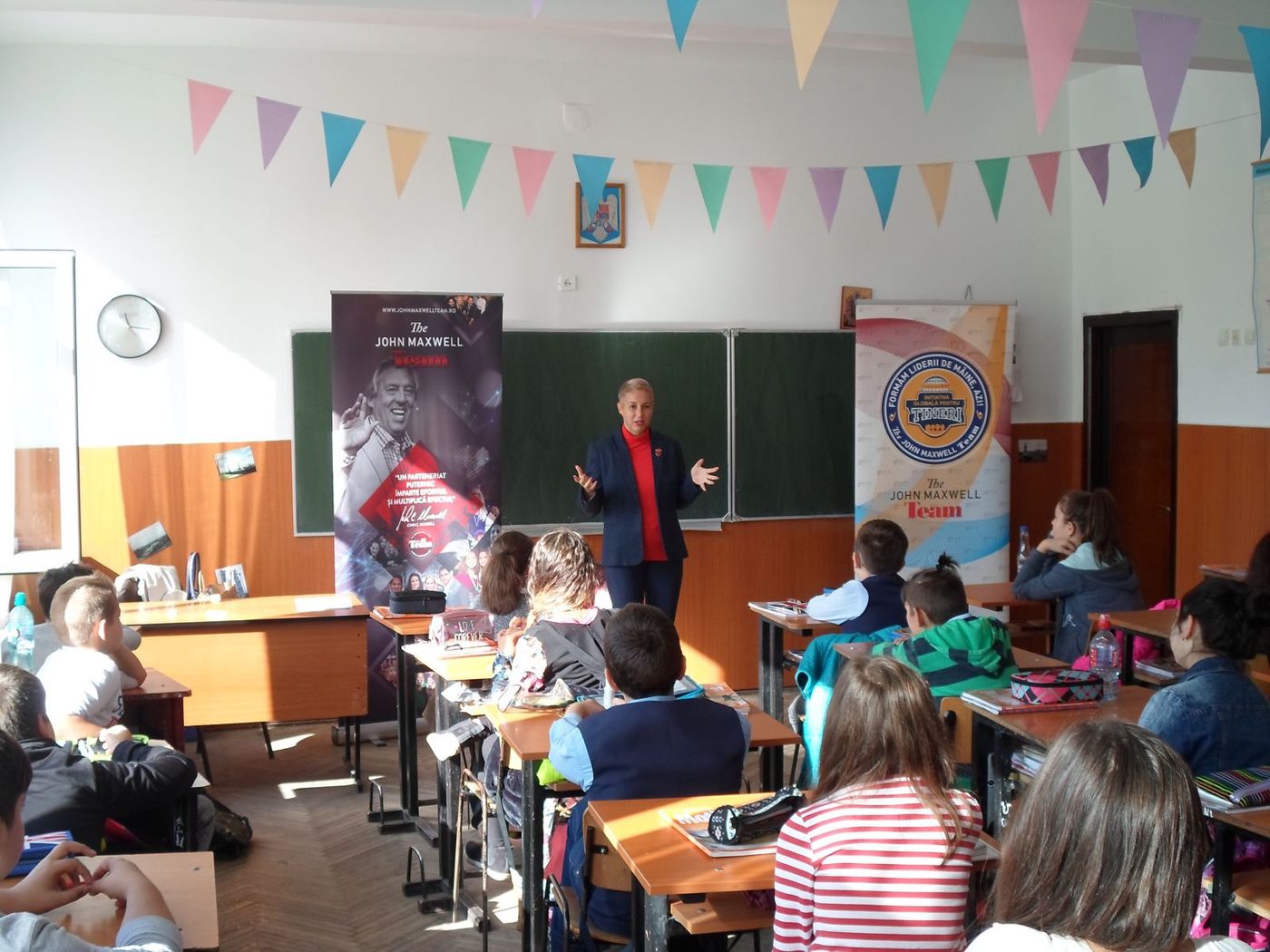
Self-esteem is one of the topics that teachers in the MaxLeaders program teach in class and one of the topics in the “iChoose” guide.
Figures counted by Asociația Maxwell România from the reports that teachers in the MaxLeaders program submit after each lesson. They update automatically.
From “who am I” to “what can I do for others”
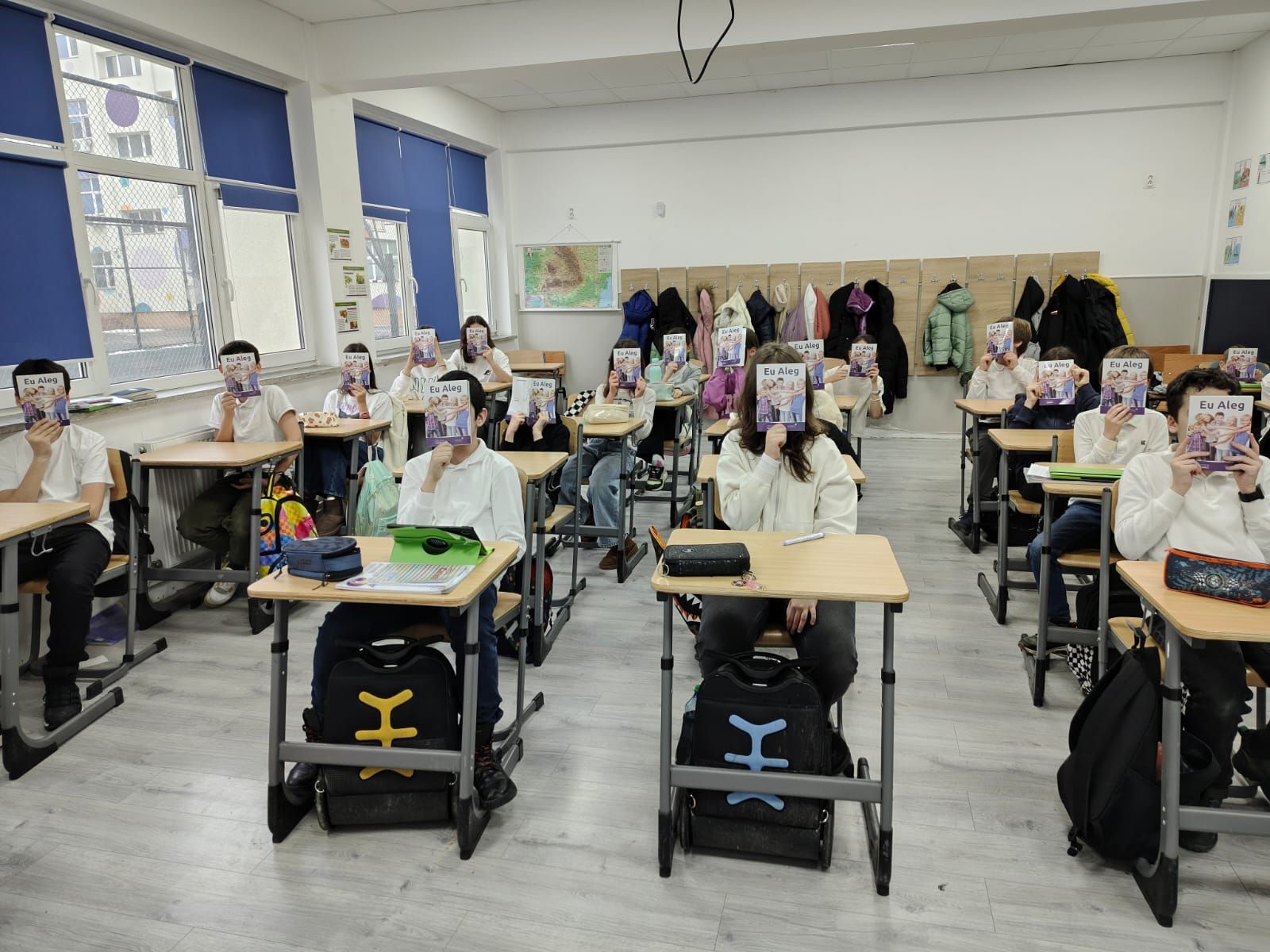
The “Education for Life” optional course, for grades 5-7, begins with self-knowledge: in the first year, “iChoose,” students discover what matters to them. Next comes “iDo,” about responsibility and perseverance, and then “iLead,” about resilience and courage in the face of hardship.
This isn't a class where the teacher talks and the students take notes. Students look at themselves and choose one thing to change.
The self-esteem lesson, among those teachers teach most often
Lessons reported by teachers in the MaxLeaders program, by topic (top six)
Source: reports from teachers in the MaxLeaders program, counted by Asociația Maxwell România.
Frequently Asked Questions
Where to get help
If sadness, fear, or anger lasts a long time and changes your child's everyday life, you don't have to handle it alone.
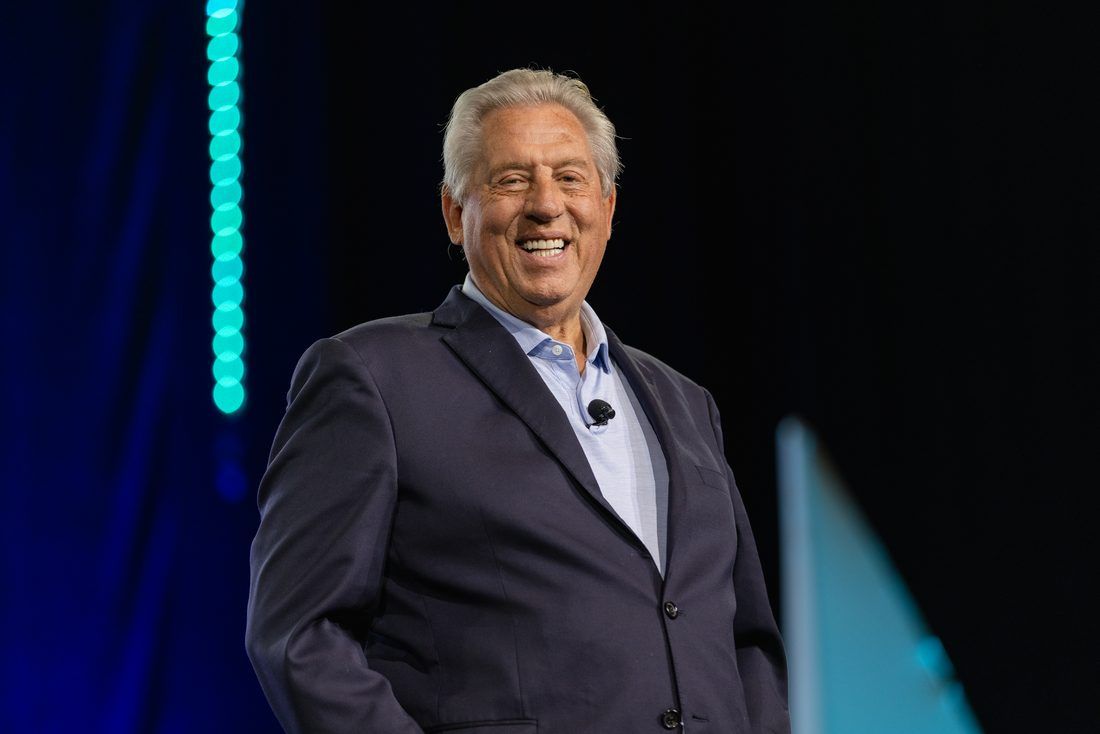
The association's programs are based on the ideas of John C. Maxwell, author of more than 100 books on leadership. The idea that ties them together: influence is built on character, and character is formed early.
The “iChoose,” “iDo,” and “iLead” guides used in schools were created by his nonprofit foundation, Maxwell Leadership Foundation, and Asociația Maxwell România translated and adapted them for schools in Romania. About John C. Maxwell and the schools program.
Sorin Popa, President of Asociația Maxwell România and of Maxwell Leadership România.
Last reviewed: November 12, 2026. Written by the Asociația Maxwell România team.
Sources
All the figures on this page come from these sources. The figures about the association's lessons are our own counts and are marked as such. The signs and steps are general guidance, not a diagnosis, and they do not replace the advice of a specialist.
- Encyclopaedia Britannica: “Emotional intelligence”: who proposed the term, the four abilities described by Salovey and Mayer, and the five components described by Goleman.
- Durlak, Weissberg, Dymnicki, Taylor, and Schellinger, “The impact of enhancing students' social and emotional learning,” Child Development, 2011: an analysis of 213 school-based social and emotional learning programs involving 270,034 students, from kindergarten through high school.
- CASEL: the full text of the same analysis: with the method and all the results.
- Salvați Copiii România, May 2024 study: cases that reached the organization's psychological therapy services between January 2022 and December 2023.
- CJRAE (County Center for Educational Resources and Assistance) Hunedoara: impact studies of the “iChoose” program: three annual reports, for the 2023-2024, 2024-2025, and 2025-2026 school years.
- Asociația Maxwell România: “iChoose” Impact Studies: a summary of the three reports, with the limitations of each and the full documents.
See also
Moral Values
What they are, 12 kid-friendly examples, and how children learn them at home and in the classroom.
Read the guide →Bullying in Schools
What it is, how to recognize it, and what students, parents and teachers can do.
Read the guide →“iChoose” Impact Studies
What changed for students who completed the guide, measured every year by CJRAE (County Center for Educational Resources and Assistance) Hunedoara.
See the results →Want the self-esteem lesson in your school?
The lessons are taught in class by teachers in the MaxLeaders program. Write to us and we'll tell you how your school can join the program.